AI personalization is creating new possibilities for how quickly creatives can be tested, optimized and adapted across audiences. For marketers, that creates an increasingly important tension: personalization can only become as dynamic as the teams and processes enabling it.
Creative and media have always been connected, but they have often operated on different cycles. Creative focuses on what the brand should say and how it should express it, while media focuses on where, when and to whom that message should be delivered. Audience strategy, data and measurement inform both. AI personalization makes those decisions increasingly interdependent.
For CMOs, the opportunity therefore extends beyond producing more personalized content. It is about creating a marketing system in which creative and media learn from the same signals and business outcomes and use those insights to shape what gets created, delivered and optimized next.
Personalization Changes the Relationship Between Creative and Media
AI personalization changes the role creative plays once a campaign is in the market.
Different combinations of imagery, copy, offers and calls to action can perform differently across audiences and contexts. Those results can inform what gets delivered next and, crucially, what creative should be produced next.
That makes creative performance an input into media optimization, while audience and performance signals become inputs into creative development. A model built around periodic handoffs becomes harder to sustain when learning is continuous.
The challenge is not simply getting creative and media teams to collaborate more closely. It is shortening the distance between what one team learns and what the other can do with that learning.
More Creative Variations Don’t Automatically Mean Better Personalization
Generative AI has made producing variations considerably easier. But the ability to create more content should not be confused with the ability to personalize effectively.
That distinction is also reflected in MMA Global’s Consortium for AI Personalization (CAP). The programme tests how AI can optimize combinations of pre-approved creative elements using audience and contextual signals. Across its use cases, the volume of creative variations differs significantly – an important reminder that effective personalization is not about reaching a fixed number of assets, but about giving the system the right range of meaningful options to learn from.
An example shared during MMA Global’s recent discussion on AI personalization makes it clear. Choice Hotels was exploring how enterprise marketing could drive greater interest in Cambria, its smaller upscale brand. Its personalization work combined three images, three copy options and three calls to action, creating 27 potential creative combinations for AI to optimize across audiences.
The significance of those combinations lay in what they enabled the system to learn. AI needs sufficient variation to identify meaningful differences in response. Too little gives the system limited room to learn. But the discussion also highlighted the opposite problem: too many variations can spread conversion data so thinly that the system has insufficient signal to optimize effectively.
That changes how marketers should think about modular creative. The objective is not maximum variation. It is maximum useful learning.
A different headline, image or CTA should ideally represent a meaningful hypothesis about what could matter to an audience, not simply another asset for the system to process.
Creative Variation Needs a Clear Measure of Success
Creative and media teams can work from the same audience definition and still pull personalization in different directions if they are learning against different measures of success.
AI makes that misalignment more consequential because optimization systems become increasingly effective at pursuing the signals they receive.
The MMA discussion illustrated this through the idea of “reward hacking.” If an AI system is asked to optimize webpage visits when the business ultimately cares about quote starts, orders or sales, it may successfully maximize the available metric without improving the outcome that matters most.
The same principle applies across creative and media. Engagement may indicate that an idea is resonating. Media efficiency may show that an audience is inexpensive to reach. Neither necessarily establishes whether personalization is creating the business outcome the organization intended.
Shared data matters, but a shared definition of success matters just as much.
The business outcome therefore needs to shape optimization from the outset, not appear only at the end of the measurement process. It should guide what creative is tested, how media is optimized and what the system learns to prioritize.
CMOs Need to Redesign the Learning Loop, Not Merge the Teams
Bringing creative and media closer together does not mean removing the distinction between them. Creative judgment, brand thinking and media expertise remain different disciplines. What needs to become more connected is how learning moves between them.
As personalization becomes more responsive, insights from activation need to travel back into creative development more quickly. If media performance shows that a particular proposition, message or execution is resonating with an audience, that learning should help shape what gets developed and tested next. Equally, creative teams need visibility into more than whether an asset “performed”; they need to understand which elements worked, with which audiences, and against which business outcome.
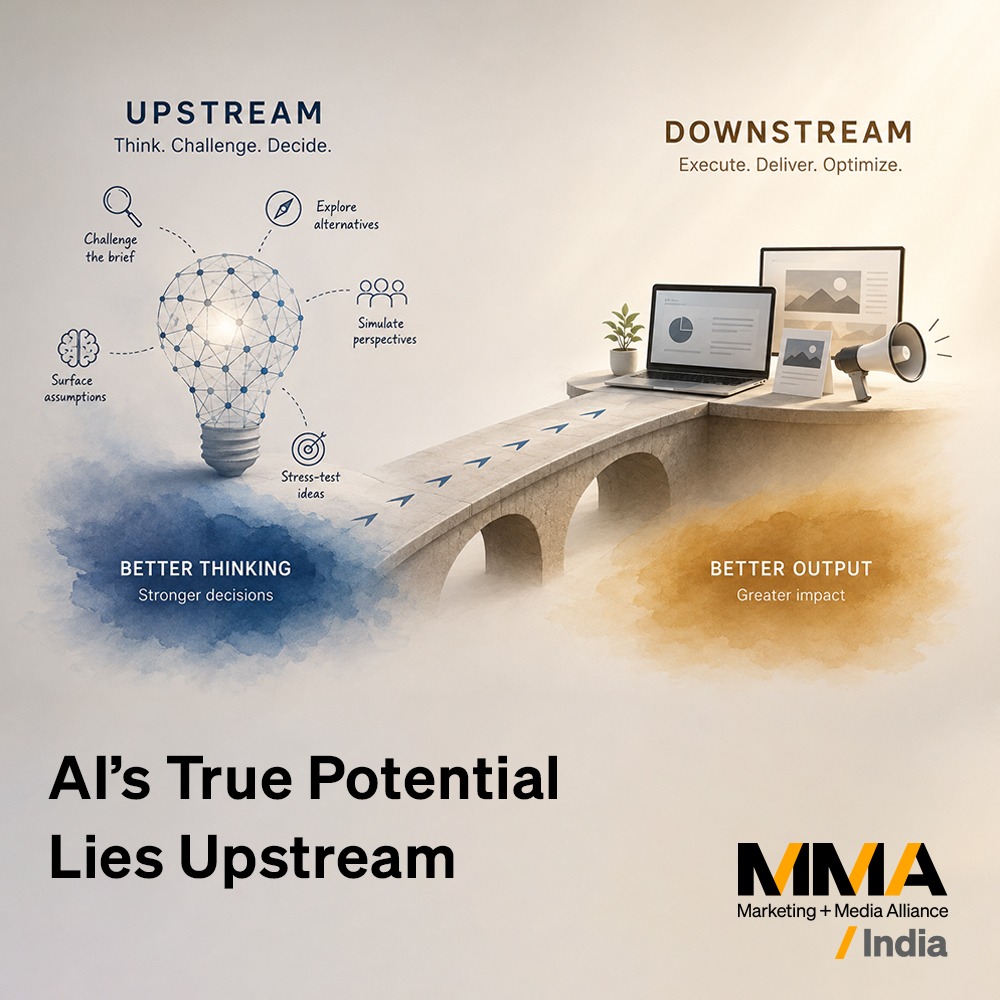
This is where the learning loop becomes important. Creative gives AI meaningful choices to test. Media and audience signals reveal how those choices perform in different contexts. Those insights then inform the next set of creative and media decisions. The value comes from shortening the distance between what the system learns and what teams can do with that learning.
That requires the right connections across data, tools and workflows, but technology alone will not create the loop. Teams also need a common understanding of what is being tested, which signals matter and how learning should influence the next decision.
Personalization Is Becoming a Connected Capability
The potential of AI personalization will not be defined by creative volume alone. It will increasingly depend on whether creative thinking, media intelligence and business outcomes can remain connected as campaigns evolve.
For marketing leaders, that makes personalization a broader capability to build across teams, not simply another layer of campaign optimization. The brands that make those connections stronger will be better placed to turn AI’s expanding capabilities into more relevant and effective marketing.