Summer is not only a season of travel. For automotive brands, it is also a moment when consumer needs become clearer. As vehicle performance, pricing, and technology become increasingly similar across brands, the real competitive gap is no longer created by specifications alone. It lies in a brand’s ability to appear at the right moment, with the right emotional relevance. This is where Moment Marketing becomes important. Consumers are not simply looking for a car. They are imagining the journeys that car can make possible: a family road trip, a weekend escape, a drive home, or a shared experience with the people they love.
The Automotive Industry: When Growth Can No Longer Rely on the Product Alone
The automotive industry is entering a phase where growth can no longer depend only on product innovation.
Electric vehicles were once expected to become the industry’s main growth engine. Yet in many markets, consumer enthusiasm has become more cautious. Hybrid vehicles are gaining attention as a more practical choice, while concerns around charging infrastructure, cost of ownership, and economic uncertainty continue to slow down a full transition to EVs.
At the same time, car ownership is becoming a more considered decision. High vehicle prices, elevated loan interest rates, and tighter household spending are making consumers more deliberate. Many buyers are postponing purchases, comparing more options, or considering alternatives such as hybrids, pre-owned vehicles, and mobility services.
This shift reveals a deeper change: consumers are not rejecting cars, but they are redefining what makes a car worth buying.
The industry itself is also changing. Cars are moving from mechanical products to connected, software-enabled experiences. Younger consumers, especially Gen Z, no longer see vehicles purely as status symbols. For them, a car is part of a broader lifestyle: technology, mobility, self-expression, and experience.
The implication is clear. Automotive brands can no longer win by saying, “This car has better features.” They need to show, “This car fits into the life you want to live.”
Moment Marketing: When Purchase Intent Begins with a Moment
Very few consumers begin their journey by saying, “I want to buy a car today.”
More often, the need begins with a moment: planning a summer trip, preparing for a family holiday, watching a road trip video, searching for weekend destinations, or entering a new stage of life such as marriage, childbirth, or a change in income.
These moments are where purchase intent quietly begins.
Moment Marketing is the ability to understand not only who the customer is, but what they are feeling, what they are planning, and when their need becomes active.
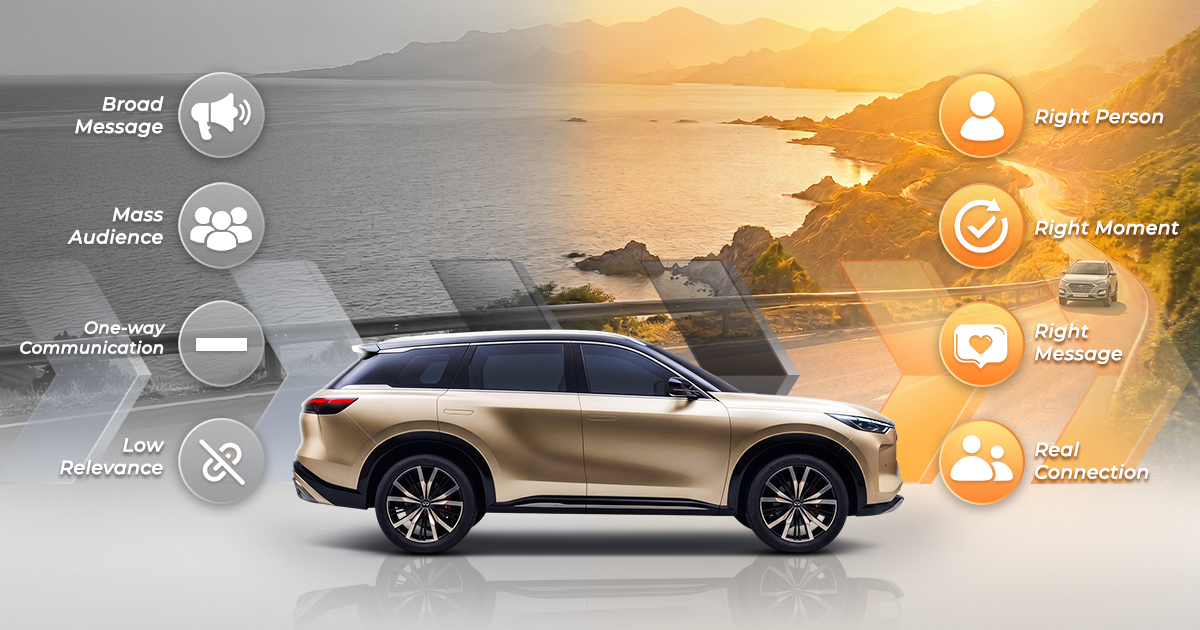
Moment Marketing means reaching the right audience, at the right moment, with the right message.
For example, when a family is planning a long-distance summer trip, they are not only thinking about horsepower or fuel efficiency. Their real questions are more human: Will the children be comfortable? Is the car safe enough for a long journey? Can it carry everything the family needs? Will this trip feel easier, calmer, and more enjoyable?
This is the emotional entry point for automotive marketing.
Instead of leading with specifications, brands need to build narratives around real-life situations. Instead of pushing a generic campaign to a mass audience, they need to identify moments of emerging intent and respond with content that fits the context.
A consumer watching travel vlogs, searching for family destinations, or engaging with summer holiday content may not be ready to buy yet. But they may already be imagining the kind of vehicle that would make that journey possible.
That is the strategic value of Moment Marketing.
Solution 1: KOL and Influencer Marketing
KOL and influencer marketing can help automotive brands turn product communication into lived experience.
Rather than producing reviews that only focus on performance, brands can work with creators to capture real journeys: a family preparing for a road trip, friends driving out of the city, parents managing a long journey with children, or a young driver discovering new places.
These moments make the vehicle feel more relatable. The car is no longer shown as an object on display. It becomes part of a story the audience can imagine themselves in.
The strongest influencer content in automotive does not simply answer, “What can this car do?” It answers, “What kind of life can this car enable?”
Solution 2: Social Media Moment Targeting
Social media allows brands to appear at the moment when demand begins to form.
Instead of distributing one message to everyone, brands can use behavioral signals to deliver more relevant content. A user engaging with family travel content may receive a message about safety, space, and comfort. A younger audience following adventure or lifestyle content may see messaging around freedom, spontaneity, and exploration.
In this model, advertising becomes less intrusive. It does not interrupt the consumer journey; it becomes part of it.
The vehicle is no longer positioned only as a product to purchase. It becomes a solution that naturally belongs to the consumer’s current plan, concern, or aspiration.
Solution 3: Augmented Reality Experience
As consumers move closer to purchase, emotion needs to be supported by confidence.
This is especially important in automotive, where the decision involves high financial commitment and practical concerns such as safety, comfort, and reliability.
AR experiences can help bridge this gap. Instead of asking consumers to imagine how a car fits into their lives, brands can let them experience it through their own devices: a simulated family road trip, a long-distance driving situation, or an interactive view of safety and comfort features.
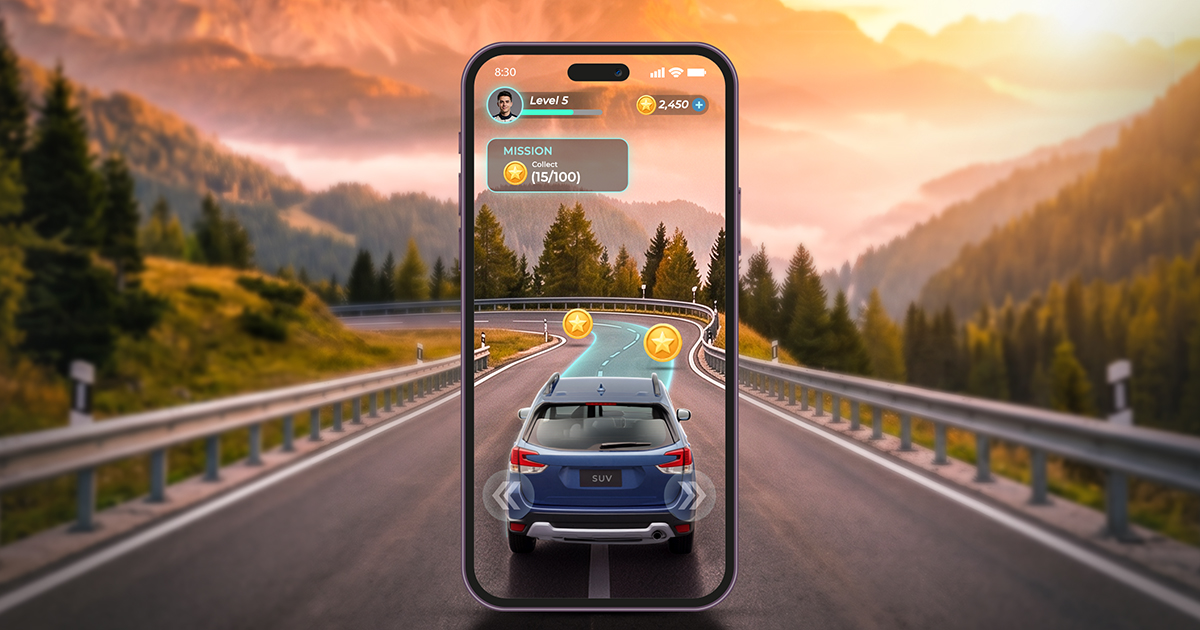
AR Experience allows customers to experience driving directly on their smartphones.
This turns product information into something more tangible. It helps consumers move from emotional interest to practical confidence.
Together, these three solutions form a connected Moment Marketing system. KOL content creates emotional inspiration. Social media targeting captures moments of emerging intent. AR experiences strengthen confidence before purchase.
The goal is not to run separate campaigns, but to build a journey that moves naturally from inspiration to consideration to action.
Representative Case Studies
Toyota – Employee Advocacy Model
Toyota shifted from conventional product-led advertising to an Employee Advocacy model, turning employees and sales consultants into authentic brand voices.
Instead of focusing only on technical features, the content highlighted personal driving experiences, family journeys, and real usage situations. Through the Influencer platform, the campaign generated nearly 940,000 interactions and helped Toyota build a more credible and accessible content ecosystem.
The insight here is simple: in a category where trust matters, real people can sometimes communicate more persuasively than polished brand messages.
Subaru × JNTO – “Enjoy My Japan”
Subaru’s partnership with the Japan National Tourism Organization showed how automotive brands can connect with travel, emotion, and exploration.
Rather than directly selling the vehicle, the campaign followed a Subaru enthusiast on a journey through Japan in a WRX STI. The car was not presented as the hero of the story, but as the companion that made the journey possible.
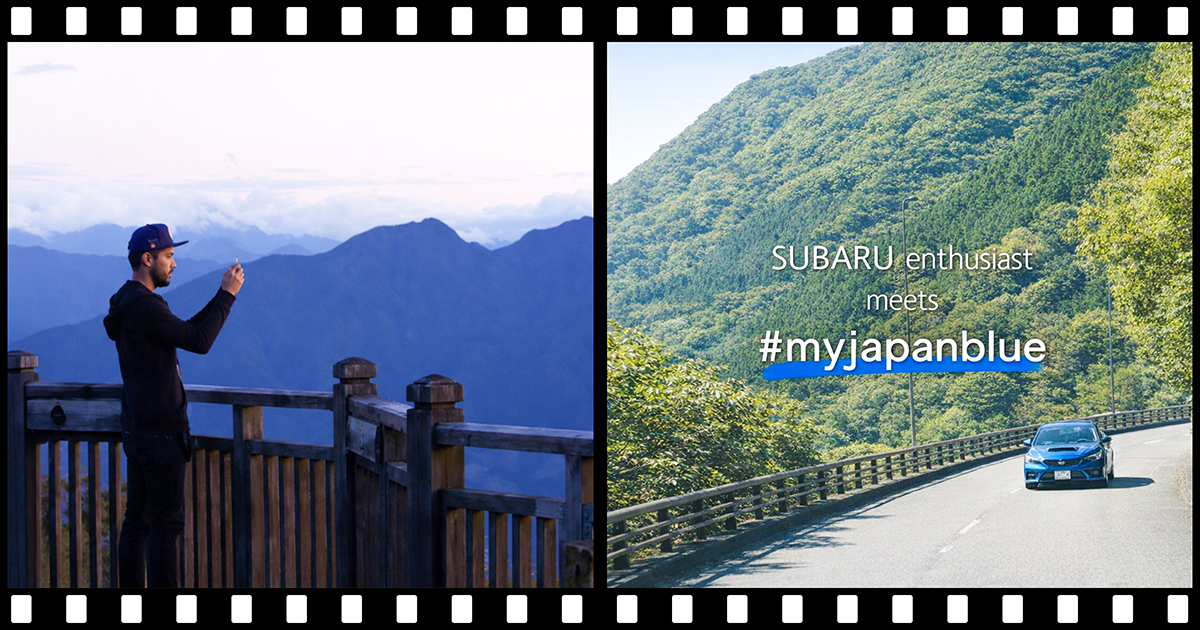
The video was showcased at Subie Fest California, one of the largest events for the Subaru community in the United States.
This is a strong example of Moment Marketing because the brand connects itself with a meaningful context, not just a product benefit.
Expert Perspective: When Touchpoints Become a Competitive Advantage
In an increasingly crowded market, automotive brands cannot rely only on product claims. Many brands can talk about performance, safety, technology, or design. Fewer brands can own the moments that matter in consumers’ lives.
That is the real opportunity for Moment Marketing.
It shifts automotive communication from broad awareness to timely relevance. It moves the brand from selling a vehicle to understanding a situation. It turns touchpoints into moments of empathy.
During summer, this becomes especially powerful. Consumers are not only comparing models. They are thinking about where to go, who to go with, what to prepare, and how to make the journey feel easier and more meaningful.
In that context, the car is not the protagonist. The journey is.
The role of the automotive brand is to become the trusted enabler of that journey: the space where family conversations happen, the comfort behind a long drive, the safety that brings peace of mind, and the companion that makes every destination feel more complete.
When brands can appear naturally in those moments, they create a connection that is more memorable than a specification and more enduring than a promotion.