Travel has always evolved, but Southeast Asia is now setting the pace. Across the region, travelers are adopting new tools faster, choosing experiences over destinations more decisively, and concentrating spend in categories that look very different from the global average.
According to Silverpush’s Destination YouTube: Travel Playbook for Advertisers 2026, the path to a booking now stretches across hundreds of content touchpoints before a traveler ever opens a search bar. In SEA, that shift is amplified. SEA travel content grew 47% year on year in 2025, outpacing global travel growth by a wide margin. The region isn’t catching up. It’s pulling ahead.
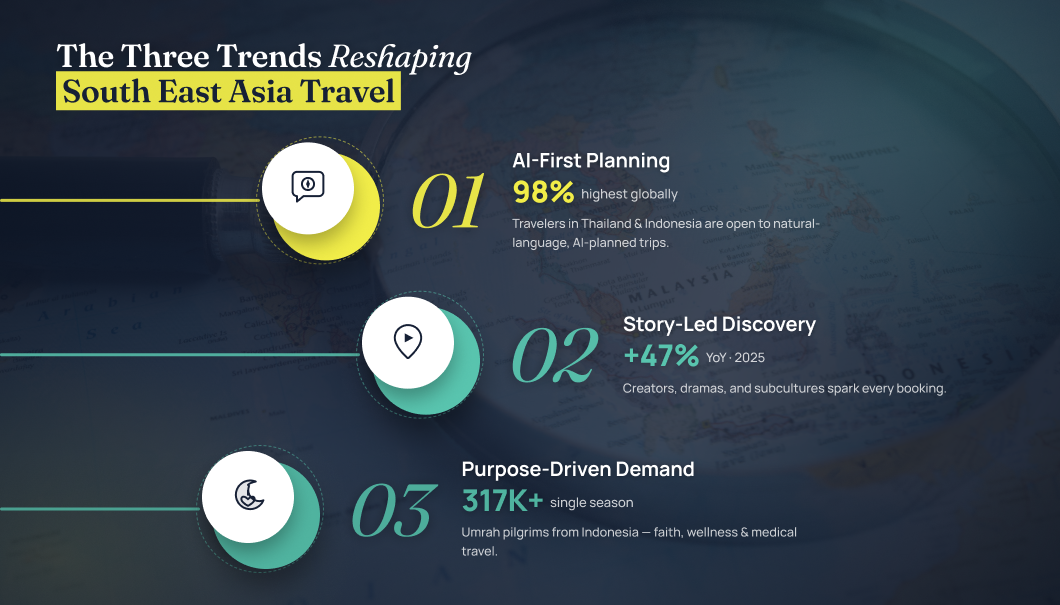
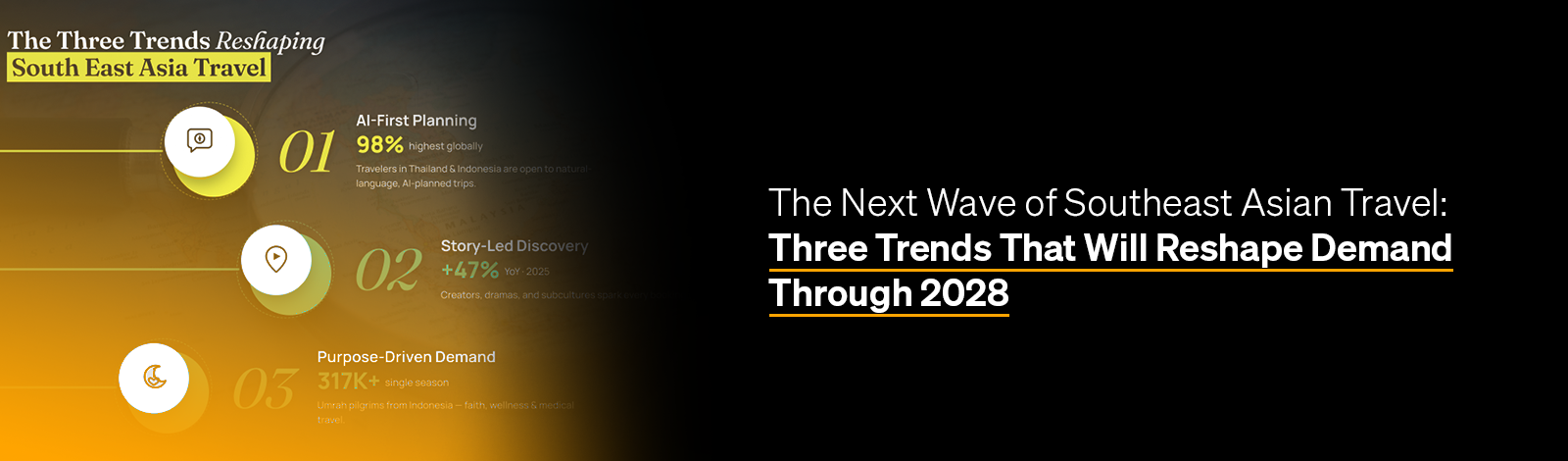
Image 1: The next three trends reshaping Southeast Asian travel demand through 2028, based on industry data and Silverpush’s Destination YouTube Travel Playbook 2026
-
SEA Is Leading the AI Travel Planning Revolution
The search-and-book behavior of the early 2020s is officially outdated. Thailand and Indonesia are tied at 98% openness to using AI for trip planning, the highest rate of any markets worldwide. Indonesian users aren’t just using ChatGPT; they use AI assistants embedded within ecosystem apps, describing trips in natural language and getting compiled, ready-to-book itineraries.
For advertisers, traditional search-led acquisition is losing reach as AI agents synthesise. The new visibility layer is contextual presence inside the content ecosystems AI draws from, particularly short-form video, which is where most trip inspiration here already lives.
-
“Set-Jetting” and Subcultures: Choosing Stories Over Destinations
The trigger for travel across the region is no longer the place. It is a series, a song, a creator, or a sport. The rise of regional Indonesian travel vlogs on YouTube Shorts and TikTok is proof that a single cultural moment, or a single creator, can move an entire travel economy. K-drama backdrops are turning Thailand and Singapore into emerging set-jetting destinations, and Hallyu fans across SEA continue to feed South Korea’s record inbound tourism.
The opportunity is to show up inside the cultural content where the spark actually happens, the drama, the playlist, and the creator vlog, not on the destination page after the decision is already made.
-
Purpose-Driven Travel Is the Region’s Resilient Core
While general leisure travel becomes more selective under economic pressure, a small set of categories is growing fastest here, and SEA leads the world on several of them. Religious travel is the clearest example. Indonesia is the world’s number one Umrah-sending country, with over 317,000 pilgrims in a single season, and the broader regional rhythm of Hari Raya, Mudik, and Songkran drives predictable, recession-resistant demand year after year. Medical and wellness tourism tell a similar story, with Thailand, Singapore, and Malaysia among the most established hubs globally.
These are not niche segments. They are the most stable, fastest-compounding growth in regional travel.
What This Means for Advertisers
Indonesia’s digital ad market alone is on track to reach USD 4.51 billion by 2031, with programmatic spend climbing fast as advertisers move toward precision over volume. The next phase of travel advertising here will not be won by reach. It will be won by relevance to the right intent, in the right content, at the right moment. As the Silverpush Travel Playbook frames it, advertisers should target intent as it forms, not audiences after the fact.
The Southeast Asian travelers of 2027 and 2028 will discover trips through AI, choose them based on passion, and book them in categories that hold their value through any economic weather. The region is not following the global travel narrative. It is writing the next chapter of it.