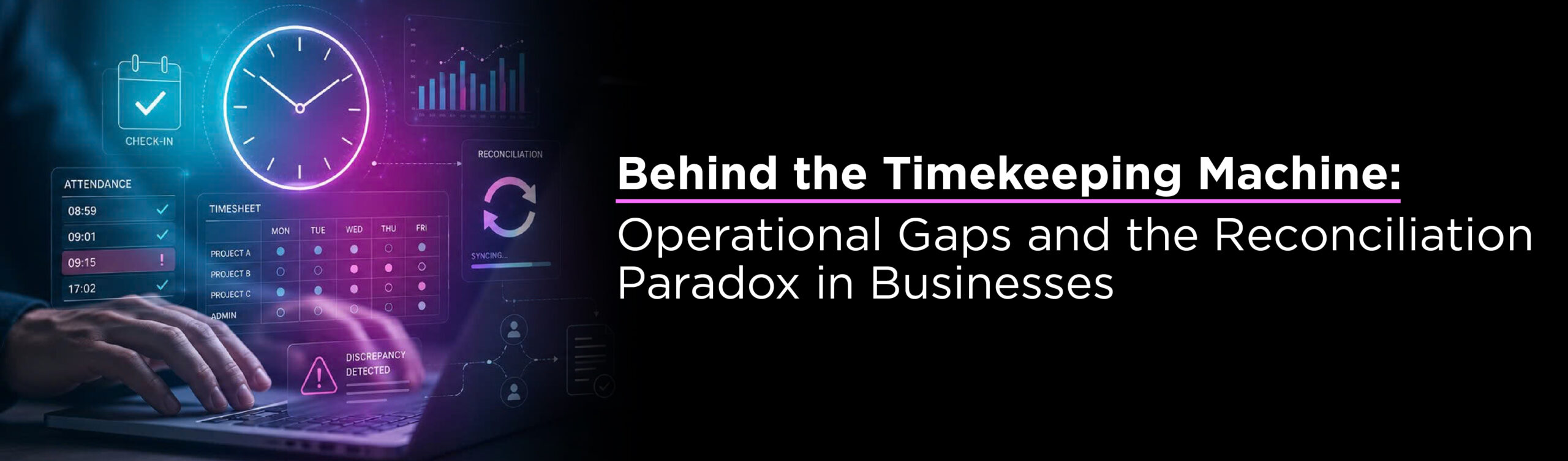
Within every business operation architecture, there are tasks often labeled as “purely administrative work” that quietly hold the key to the flow of workforce data. Attendance tracking – commonly known as timekeeping – is one of those tasks.
Most managers approach this activity from a control perspective: purchasing a fingerprint scanner, placing it at the entrance, and assigning the HR department to export attendance files at the end of each month. However, once the workforce exceeds a certain scale – especially in chain models, field–force organizations, or businesses requiring operational flexibility – this mechanical control model begins to expose silent operational black holes that gradually erode profits and weaken organizational culture.
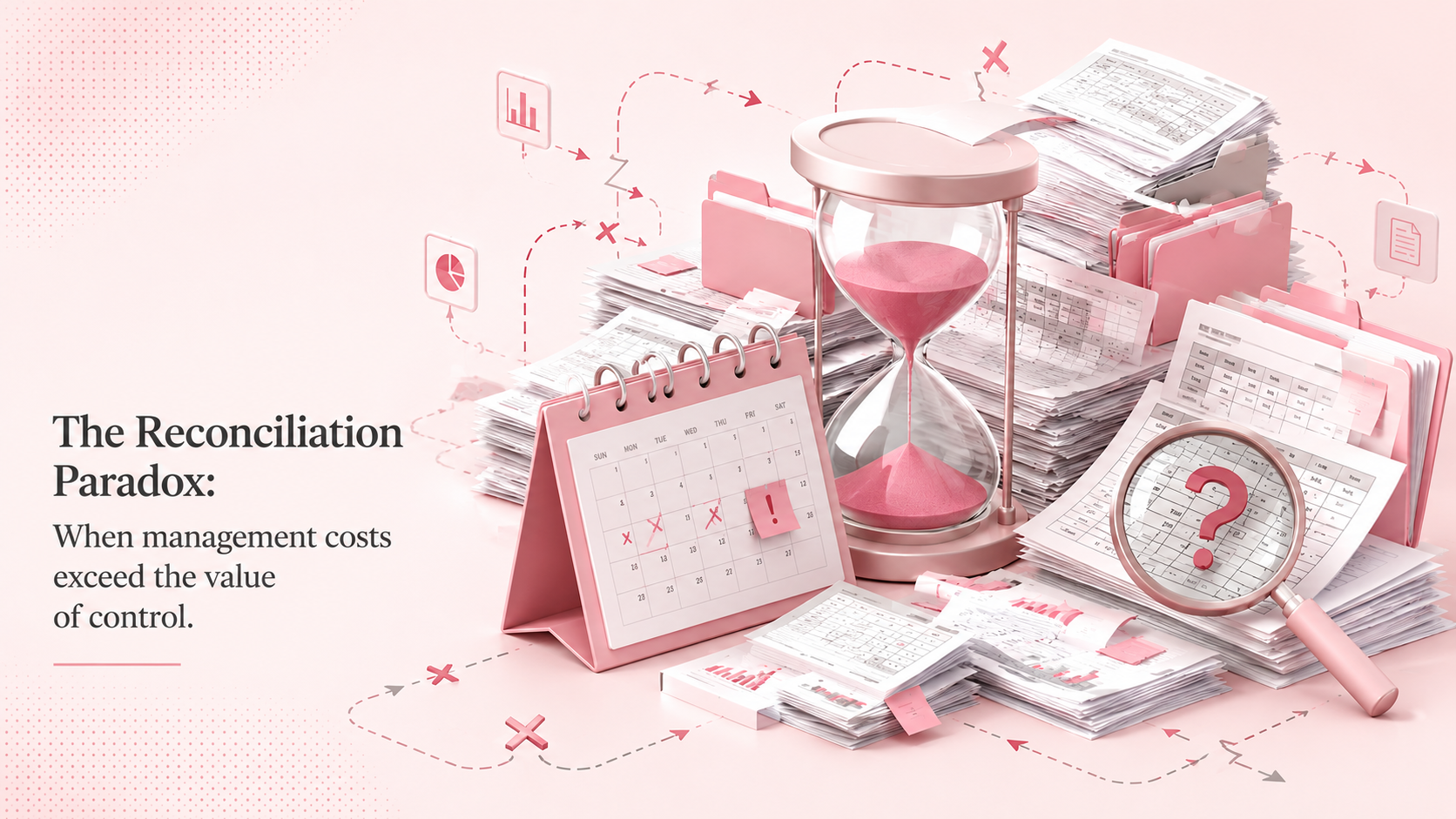
- The Reconciliation Paradox: When Management Costs Exceed Control Value
Traditional attendance systems have always carried an efficiency paradox. Let’s take a simple operational economics example in a company with 150 employees working across shifts or multiple locations.
Every month, an HR executive may spend 3–5 working days on a single task: reconciliation. This process includes consolidating raw data from fingerprint scanners, collecting hundreds of explanation forms through paper notes or chat messages (missed check–ins, justified late arrivals, leave requests, shift swaps), and manually matching everything in Excel spreadsheets.
What are the consequences of this process?
- Systematic error rates: Operational management studies indicate that manual multi–source reconciliation always carries a 3%–5% error margin. These inaccuracies flow directly into payroll – either causing financial losses for the company or unfair disadvantages for employees.
- Waste of intellectual resources: Instead of focusing on high–value activities such as workforce planning, culture development, or performance optimization, senior HR personnel become trapped in repetitive operational tasks. The opportunity cost of these wasted workdays is significantly higher than the value recovered from penalizing employees for lateness.
As businesses continue scaling, the issue is no longer simply “whether employees checked in,” but whether the organization can still operate efficiently when attendance data becomes fragmented across departments, branches, and manual workflows.
- Data Fragmentation and the “Static Information” Trap
One of the biggest mistakes leaders make is managing a business using outdated data. With mechanical attendance systems, workforce presence data becomes a frozen stream. Managers only discover whether employees attended work properly or took leave on the 5th day of the following month – once attendance reports are finalized
This delay creates major operational blind spots:
- Inability to optimize fill rates: In service, retail, or manufacturing industries, workforce shortages at critical moments (due to late arrivals or unexpected absences) immediately impact customer experience and disrupt operations. Without real–time data, managers cannot make timely staffing adjustments.
- Location fraud and performance gray areas: For mobile employees such as field sales teams, delivery staff, or site supervisors, relying on trust or image–based check–ins through messaging apps is an unreliable solution. Managers cannot verify data integrity, leading to hidden losses in actual working hours.
The deeper problem is that attendance data often exists in isolation, disconnected from operational, performance, and workforce management systems. This creates a “static information trap,” where leaders only see the final numbers but lose visibility into real operational movements happening daily inside the organization.
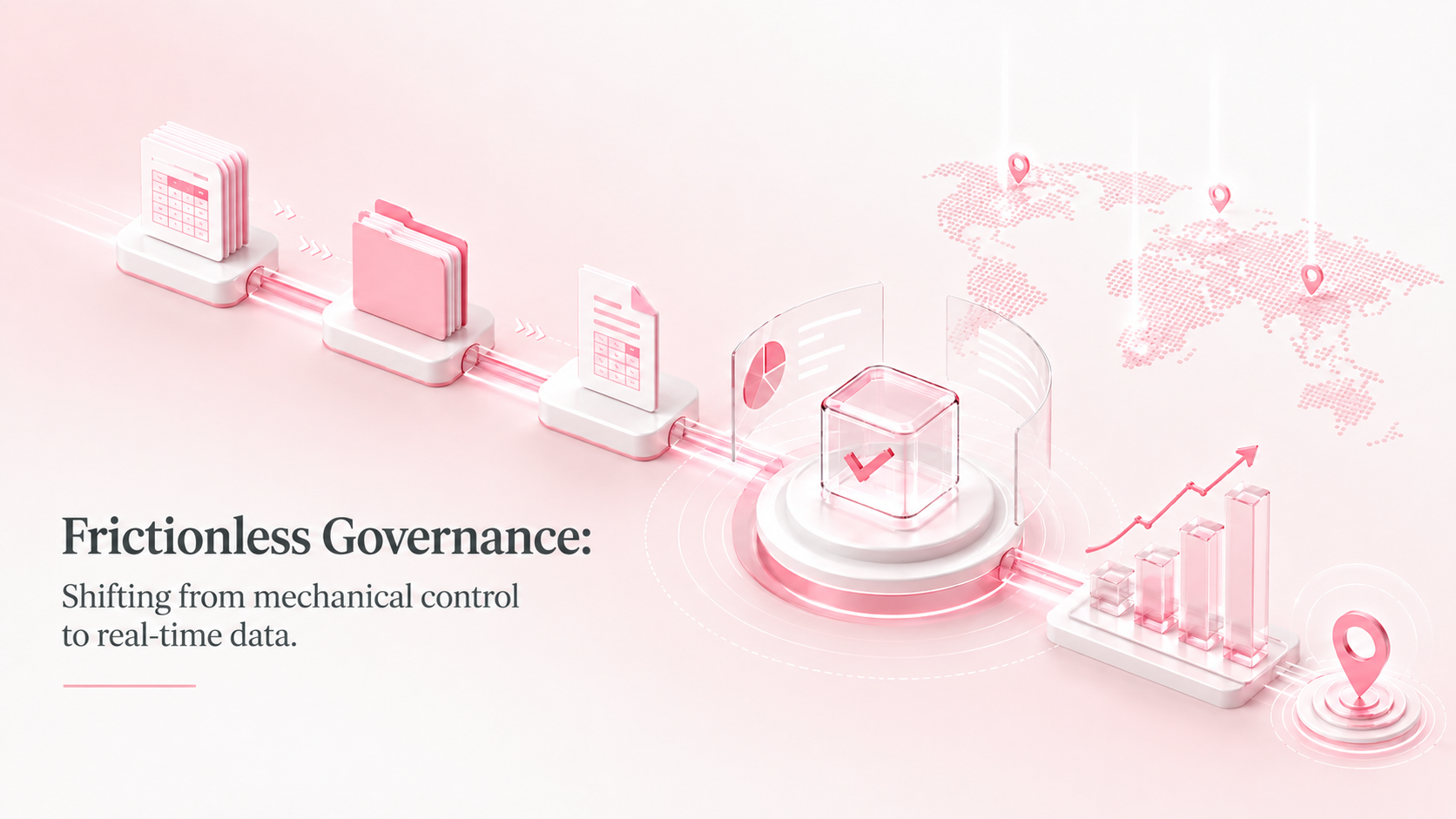
- From Mechanical Control to “Zero–Friction Management”
To fundamentally solve this issue, management thinking must shift from “control through barriers” to “zero–friction management.”
Human nature resists complicated processes. Forcing employees to install heavy applications, queue in front of malfunctioning fingerprint scanners, or fill out paper forms simply because they forgot to check in creates unnecessary friction that damages the employee experience.
When tools generate too many barriers, employees look for ways around the system – and HR ultimately bears the burden.
A modern workforce management system should meet three core criteria:
Seamless Integration
Attendance tools should exist directly within communication platforms employees already use daily. Checking in should feel natural, take less than 3 seconds, and require no additional learning curve.
Multi–layered Field Verification
Instead of relying on fixed hardware, geofencing technology combined with real–time image verification transforms any location into a valid attendance point. This removes hardware maintenance costs while enabling flexible workforce management anywhere.
Automated Behavioral Nudges
Rather than HR acting as the “enforcer,” the system should automatically guide employee behavior. Smart reminders before shifts or after working hours help employees gradually build discipline habits. Technology becomes a subtle behavioral framework, reducing emotional conflicts between HR and employees.
This is also where platforms like CNV Work begin to demonstrate their operational value. Instead of treating attendance as a standalone administrative task, CNV Work centralizes workforce management, GPS verification, image authentication, automated reminders, and operational reporting into a single connected system.
More importantly, leaders can monitor workforce status in real time across branches, departments, or field teams, helping businesses reduce operational blind spots, improve workforce discipline, and optimize productivity without creating unnecessary friction for employees.
Conclusion
A fingerprint scanner or an end–of–month Excel file is not merely a time–tracking tool. It reflects the technological capability and operational management mindset of an organization.
When a company aims to scale while its backend operations still rely on fragmented manual processes, those inefficiencies become invisible barriers slowing growth. Digitizing workforce presence management is not a luxury technology trend – it is a foundational step toward closing resource leakage gaps, building a transparent real–time data system, and freeing leadership teams to focus on strategic growth.