As banking applications gradually fall into a “sea of sameness,” pure convenience is no longer enough to maintain a competitive edge. This article deciphers the psychology of “Lazy Loyalists” and proposes in-depth Brand Experience (BX) strategies to break through user apathy. Through the SCT (Strategy – Creative – Technology) model from Novaon Digital, you will find the solution to elevate experiences and forge an enduring bond between brand and customer.
Part 1: The Context – When “Lazy Loyalty” Meets the AI Era and the Disruption of Ad Touchpoints
Over the past decade, the banking and finance sector has witnessed a fierce digital transformation arms race with massive investments. Paradoxically, however, as mobile apps reach technical perfection (over 4.5 stars), banks are falling into a “sea of sameness.” Pure convenience has inadvertently eroded the “soul” of the relationship, turning every interaction into an automated process devoid of empathy.
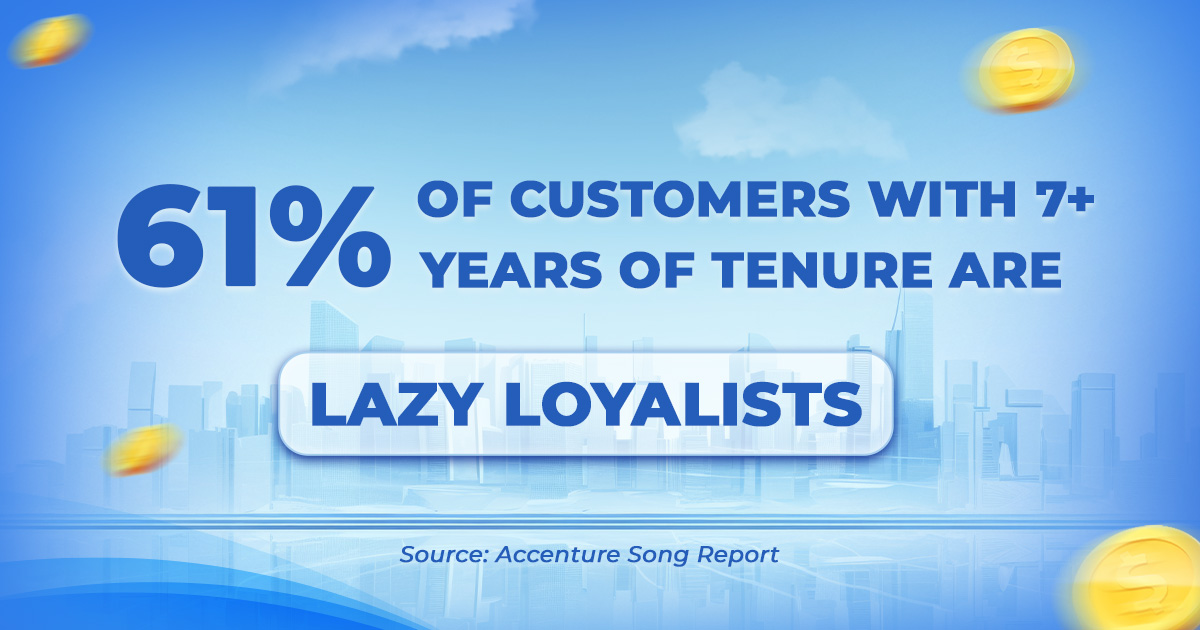
61% of customers stay with a brand because they are reluctant to change
Source: Novaon Digital
The inevitable consequence is the rise of “Lazy Loyalists” – who account for up to 61% of the customer segment staying for over 7 years (According to a report from Accenture Song). They stay not because they love the brand, but due to habit and inertia, while remaining ready to split their cash flow toward other competitors offering more immediate incentives. At this point, traditional “hard-sell” Ads touchpoints not only become invisible but also backfire, with over 51% of users feeling “terrorized” by repetitive loan or card opening banners.
This disruption forces marketers to shift their mindset: Instead of merely trying to convey one-way product information, focus on using social media as a tool for dialogue. To awaken the “Lazy Loyalists” and escape the interest rate race, Brand Experience (BX) must shift from trying to sell to building an “Intent-driven” ecosystem. The brand needs to appear exactly when the customer needs support, recognition, and rewards based on actual behavior. This is where data and creativity must merge to create a seamless and effective customer journey.
Part 2: Bank – Finance Brand Experience Strategy 2026 – When Experience Shapes New Communication
To break through feature saturation and regain control of the customer journey, banks cannot continue to compete with superficial advertising campaigns. Establishing a Brand Experience (BX) ecosystem based on customer intent (Intent-driven) is the core key.
Here are 3 focal BX strategies to optimize engagement, along with execution solutions from Novaon Digital:
- Shifting from “Product Provider” to “Financial Advisor” (Advise first, sell second)
Instead of deploying intrusive ads that trigger defensive psychology, the new BX strategy positions the bank as a companion providing solutions. Reality shows that young customer segments (Gen Z and Millennials) have a huge demand for expanding their financial management knowledge. Rather than forced banners for cards or loans, the customer journey should be designed as an intelligent navigation system. By prioritizing education and consulting, banks establish a foundation of trust (Reassure), encouraging customers to proactively interact and seek services instead of avoiding traditional media channels.
- Building a Consistent Data System and Physical Experience
One of the biggest barriers to personalization is information fragmentation when customers switch between channels. The sustainable solution is building a real-time data system where the Mobile App acts as the central coordination hub. An effective BX experience is not limited to the digital space but requires synchronization at physical branches—which 65% of customers still regard as a symbol of stability. The optimal BX strategy is a consistent “Phygital” (Physical & Digital) model: customers prepare steps or book consultations via the app, and upon arriving at the branch, all needs are already recognized (Remember) for immediate service, eliminating the annoyance of repeating information.
- Exclusive S.C.T Solution – The “Convergence Engine” for Creating Brand Experience
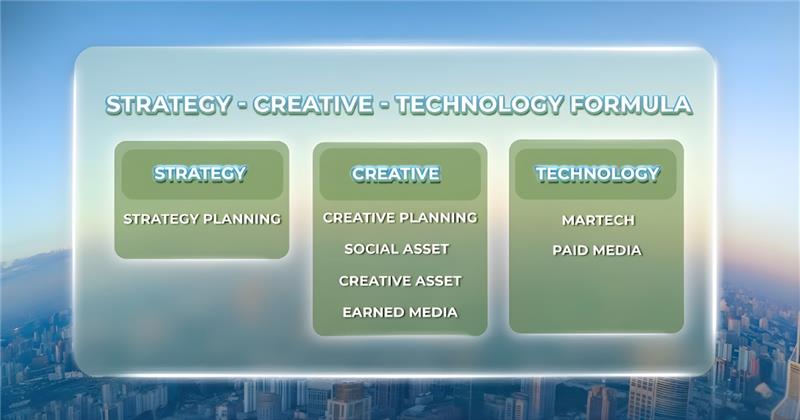
Suggested S-C-T formula applied in the Bank-Finance industry to enhance Brand Experience
Source: Novaon Digital
In the digital era, the S-C-T (Strategy – Creative – Technology) model serves as more than just a toolkit. It is a framework designed to help financial institutions solve a core challenge: eliminating fragmentation in the customer experience.
By shifting the focus from internal features to user benefits, the S-C-T integration delivers tangible value for marketing leaders:
- Strategic precision to prevent resource waste (Strategy): Instead of mass broadcasting, Strategy acts as a compass to help you navigate through every stage of the user’s psychological journey. The primary benefit is the ability to deliver the right message at the exact moment of need, increasing organic engagement without being intrusive.
- Transforming complex data into meaningful connections (Creative): The banking industry is often defined by dry figures and complicated procedures. The Creative element “humanizes” these barriers through intuitive visuals and videos. When information becomes easy to digest, customers feel more confident and secure in their decision-making process.
- Personalizing the experience at scale (Technology): Technology is not just for measurement; it is for creating sophistication. Through automation, you can provide a “tailor-made” feeling to millions of customers simultaneously. Delivering offers at the right time not only reduces acquisition costs but also builds long-term satisfaction.
- Driving sustainable growth through trust: The ultimate strength of the S-C-T unification lies in converting invisible interactions into tangible results. Rather than chasing vanity metrics, this model supports businesses in achieving core objectives like app downloads or new account openings, all grounded in long-term customer trust.
Part 3: Case-study Viettel Money, MSB & VPBank – Optimizing Conversion through the Brand Experience (BX) Ecosystem
After analyzing the context and BX strategies, let’s look at practical examples in the Vietnam Banking & Finance industry. Each brand faced unique challenges, but the common thread was leveraging the power of experience to connect with users, enhance interaction efficiency, and assert market position.
Case-study Viettel Money: “Peaceful Tet” Campaign – Empathizing with Customer Intent through Content Experience

“Peaceful Tet – Sharing Love” campaign by Viettel Post x Novaon Digital
Source: Novaon Digital
In 2022, Viettel Money faced a major challenge as the Fintech market became fiercely competitive amidst the pandemic. The brand aimed to build an Intent-driven experience ecosystem. Instead of advertising app features, Viettel Money focused on personalizing messages based on the user’s need to share during the Tet holiday. The campaign combined interactive experiences (Gamification) directly on the app with highly localized communication content. This approach turned dry payment features into emotional stories, helping the bank become a subtle companion in the customer’s daily life. Result: The campaign recorded an explosion in media effect with tens of millions of reaches and an Engagement Rate far exceeding expectations. This success helped Viettel Money affirm its leading brand value and build solid trust (Reassure) with users.
Case-study MSB: “Gieo Một Vốn – Sinh Bốn Lời” Livestream – Optimizing Young Customer Experience through New Formats

Livestream campaign partnership between MSB x Novaon Digital to enhance Brand Experience
Source: Novaon Digital
In the phase of digital competition, MSB needed to increase brand awareness among tech-savvy young customers. The biggest challenge was how to make financial services more accessible and interesting. MSB implemented a BX strategy through Interactive Livestreams, turning the account opening process into a digital cultural space called “Sân Đình Làng Lãi.” The highlight was integrating the fast online eKYC account opening flow combined with a “Reward the moment”mechanism. Customers could receive gifts and beautiful account numbers right during the live session as soon as their need arose, creating a smooth transition from Online to reality. Result: The livestream sessions achieved very high viewership and interaction, recording an impressive number of new accounts opened in a short time. MSB successfully left a mark (Remember) as a modern, professional bank that always understands the needs of the new generation.
Case-study VPBank: “TapnPay” Campaign – Shaping Payment Habits from Practical Experience
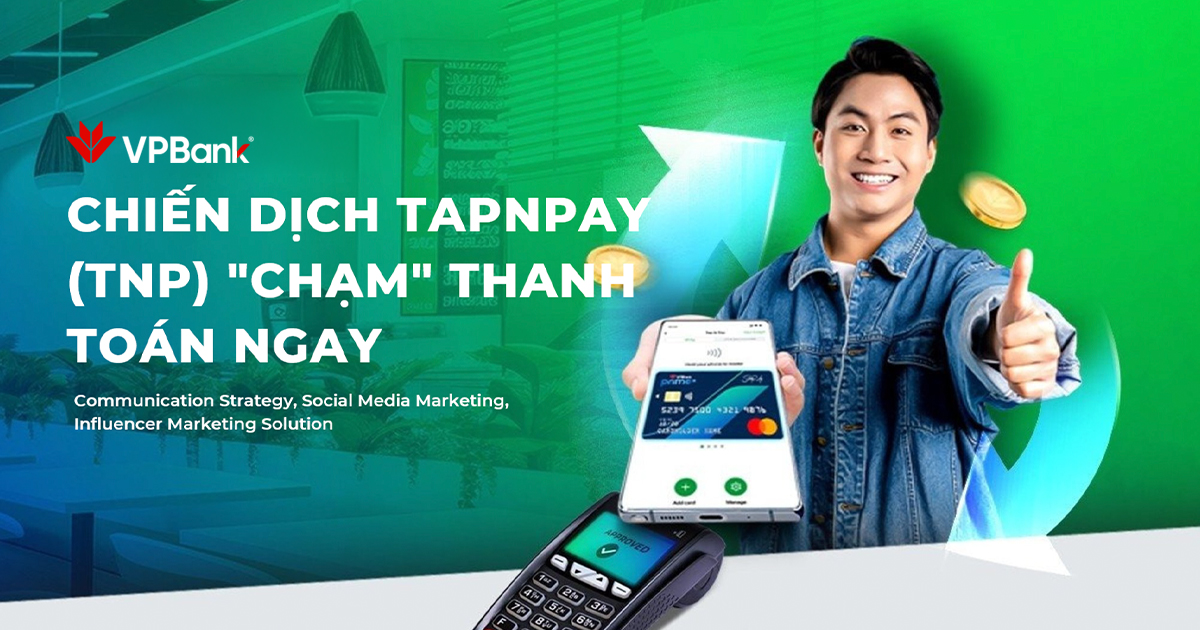
VPBank introduces simple and convenient payment features with the TapnPay campaign
Source: Novaon Digital
To educate the market on the TapnPay contactless payment solution, VPBank needed a strategy strong enough to change traditional behavior. The BX strategy focused on directly impacting the user’s real-life situations (such as forgetting a wallet or needing to pay quickly). Through content that hit the right psychological notes and a network of influencers, the brand transformed a technical feature into a modern lifestyle. The system also optimized digital touchpoints to ensure messages appeared exactly when customers intended to spend, thereby optimizing the user experience journey. Result:The campaign garnered millions of interactions across social media platforms, affirming VPBank’s pioneering position in digital transformation and shaping a new, more modern, and convenient consumer trend in Vietnam.
Closing
From the “Lazy Loyalists” problem and the disruption of ad touchpoints, it is clear that 2026 is no longer a race for interest rates or app features, but a journey of building trust through proven experiences. In the era of Unconstrained Banking, customers prioritize the feeling of being understood and accompanied over short-term incentives. This makes Brand Experience (BX) a survival factor, requiring absolute consistency from digital content to branch experience to eliminate the “sea of sameness.”