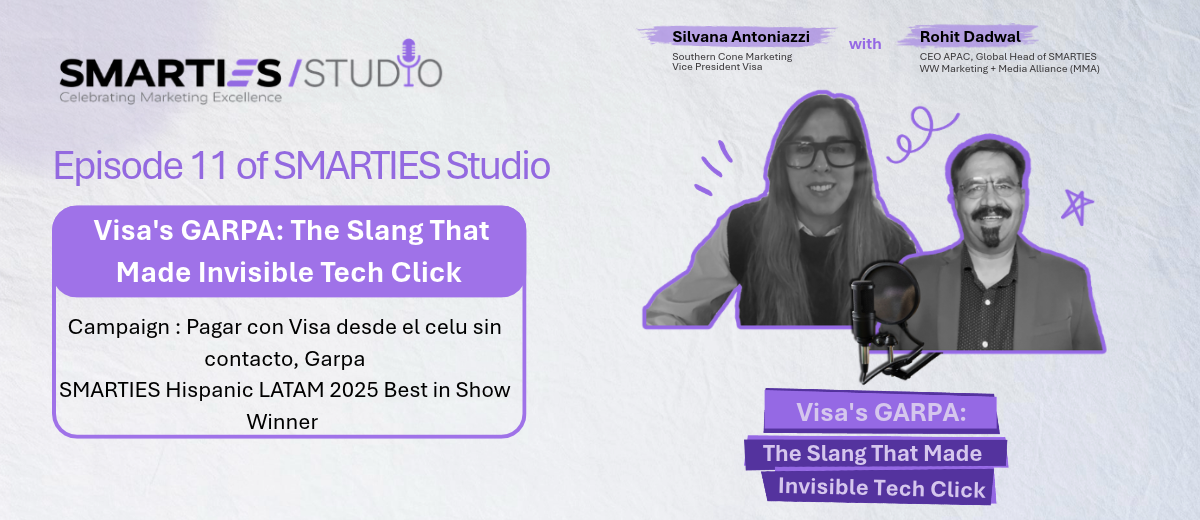
In this episode of SMARTIES Studio, Rohit Dadwal speaks with Silvana Antoniazzi, Vice President at Visa, about GARPA—the culturally relevant Argentine slang that helped Visa make an invisible technology advantage understandable, memorable and meaningful.
The challenge wasn’t simply to introduce NFC and contactless payments. Consumers were already comfortable using QR codes, even though QR payments came with frustrations around scanning, Wi-Fi, mobile data and payment aliases. The real challenge was to convince people that there was a better way to pay. The breakthrough was GARPA.
Rather than explaining the technology, the campaign borrowed a slang expression already embedded in Argentine youth culture—one that conveyed the feeling that something works, makes sense or is simply worth it.
This allowed Visa to translate a complex, invisible technology into a simple cultural idea that people could understand and repeat. But GARPA also raises bigger questions for marketers: Can cultural relevance drive technology adoption? Can a local expression work for a global brand? How can social listening reveal a behavioural opportunity rather than just consumer frustration? And when does a creative idea become more powerful than communicating the product itself?
Rohit goes behind the case to explore the thinking, consumer insight, creative process, global-local dynamics and behavioural challenge that made GARPA work. SMARTIES Studio goes beyond the awards to explore the thinking, strategy and creativity behind impactful marketing.