In 2026, much of commerce is decided before a consumer consciously makes a choice. Ranking algorithms, recommendation engines, and AI agents determine which products are surfaced, compared, and considered. Marketing increasingly operates inside those systems.
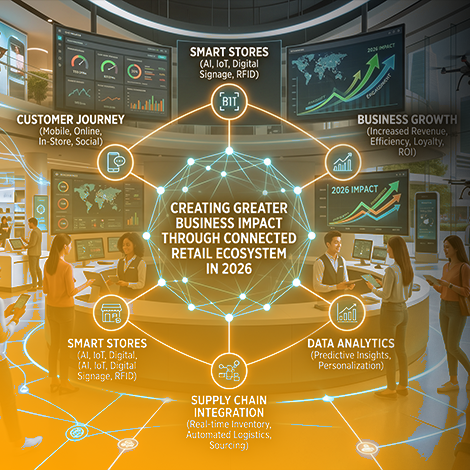
Across APAC’s marketplaces and Retail Media Networks (RMNs), commerce environments are becoming machine-governed ecosystems where exposure, optimization, and transaction occur within the same closed loop. The shift is not simply about media investment moving closer to the point of purchase. It is about marketing now functioning within algorithmic decision layers that shape demand in real time.
Shopper marketing is being rewritten, not by new formats, but by machine-led orchestration.
The Inflection Point
For decades shopper marketing operated in cycles. Investments were concentrated around seasonal events and promotional windows, with trade budgets securing physical or digital placement while media activity built awareness further up the funnel. Measurement systems often sat in parallel, linking sales impact to promotions but rarely connecting it to broader brand investment.
That structure no longer reflects how consumers buy or how platforms operate.
Today’s shoppers move fluidly across search, apps, social commerce, livestreams, and physical stores often within the same session. Increasingly, AI agents assist comparison shopping, synthesise reviews, and surface recommendations before a brand message is ever directly encountered.
Consider a shopper preparing for a weekend trip. She starts by asking a voice assistant for “lightweight cabin luggage under $150.” The assistant suggests three brands based on ratings and availability. She clicks through to a marketplace app, where reviews are summarised automatically and price history is displayed. Minutes later, she scrolls through social media and sees short-form videos featuring the similar products – some organic, some sponsored. In-store later that day, she scans a QR code to check whether the online price is lower. When she returns to the marketplace app later that week, the ranking has shifted – the preferred model now appears higher, bundled with a travel accessory. The system has recalibrated based on engagement signals.
In that single journey, discovery, comparison, validation, and transaction span voice, marketplace, social commerce, and physical retail, often guided by AI systems synthesising information before the brand’s own messaging is directly encountered.
The behavioural shift is accelerating rapidly. Shopping-related use of generative AI tools grew by more than 35% between February and November 2025 alone. Consumers are increasingly comfortable delegating comparison, filtering, and discovery tasks to machine systems before engaging directly with brand messaging.
Commerce platforms now sit at the centre of that journey. And because they control exposure, ranking, and transaction within the same environment, they possess something marketing has historically lacked: a continuous signal loop.
This is what makes 2026 a tipping point. Commerce ecosystems are increasingly governed by algorithmic decision layers that shape what is visible, recommended, and ultimately chosen.
From Promotion Spikes to Predictive Demand Systems
The old shopper model relied on visibility and discounting. Brands negotiated placement, funded activation, and measured short-term uplift. AI is dismantling that episodic logic.
Within leading RMNs and marketplaces, decision systems now monitor SKU velocity, shopper behaviour, contextual signals, and inventory flow in real time. Budgets are reallocated dynamically, creative variants adjust automatically, and sponsored placements shift based on predicted elasticity.
Industry forecasts reinforce the scale of this shift. IDC predicts that by 2027, half of Asia-Pacific retailers will deploy generative AI to produce and optimise product content — driving measurable conversion improvements while reducing operational costs by up to 30%. Commerce optimization is no longer experimental; it is becoming embedded infrastructure.
Rather than asking, “How do we win this promotional moment?” brands must now ask, “How does the system decide which product gets surfaced and why?”
This distinction matters. Predictive systems shape demand before it fully forms, influencing ranking, inclusion, and recommendation logic, often invisibly.
And because commerce environments are closed-loop, they provide immediate feedback. That accelerates learning but also amplifies bias.
AI Agents and the Algorithmic Shelf
The most significant shift in commerce media is not automation inside platforms, it’s the emergence of AI agents as intermediaries between brands and buyers.
Increasingly, consumers are delegating parts of the shopping journey to intelligent systems. These systems do more than surface ads. They compare products, synthesise reviews, evaluate price history, recommend bundles, and even anticipate replenishment. The role of the shopper is subtly shifting: from active searcher to decision validator.
Recent research from Visa shows that nearly three-quarters of consumers across Asia Pacific are already using AI-powered tools to discover, track, or learn about products. Machine-mediated discovery is no longer niche behaviour; it is becoming default behaviour.
For brands, this changes the competitive battlefield. Success is no longer defined solely by share of voice or search ranking. It is defined by how well a product is understood, interpreted, and prioritised by machine decision layers.
For instance, when a consumer asks a marketplace assistant for “the best vegan protein supplement,” the system does not show every brand equally. It ranks based on price history, ratings, fulfilment speed, prior shopper behaviour, and platform incentives. In that moment, the brand’s visibility is determined less by campaign weight and more by how the system interprets its signals.
AI agents evaluate structured attributes, performance history, contextual signals, and behavioural patterns at scale. Products that are clearly described, richly attributed, and consistently positioned are more likely to be surfaced. Those that rely purely on promotional weight risk being filtered or deprioritised in recommendation flows.
The shift is subtle but profound: commerce media is moving from impression competition to algorithmic inclusion.
This also alters the role of shopper marketing. Historically focused on influencing the consumer at the moment of choice, it must now influence the system that determines what choices are presented. In 2026, brands are not only marketing to people. They are marketing within decision systems.
The Risk: When Commerce Logic Overrides Brand Logic
The power of AI-driven commerce systems comes with a trade-off.
AI inside retail environments optimises toward measurable signals – conversion, velocity, elasticity. Over time, this can skew exposure toward high-margin or discount-responsive SKUs. Promotional messaging can dominate and brand hierarchy can flatten.
Closed-loop measurement creates efficiency but it can also narrow focus.
MMA’s Brand as Performance research has consistently shown that brand equity multiplies conversion impact. Strong brands convert more efficiently and command higher lifetime value. Yet if commerce optimization prioritises only short-term return, the equity layer can be undervalued. The risk is not AI adoption. It is over-optimisation toward immediacy.
Commerce media must therefore balance two forces:
- Algorithmic efficiency
- Strategic brand stewardship
When those forces align, growth accelerates sustainably. When they diverge, brands risk training the system to value only the transactional.
Commerce Media as Growth Infrastructure
Commerce media in 2026 no longer sits at the end of the customer journey, it increasingly defines the journey itself. It is a system that determines what is surfaced, recommended, and ultimately purchased.
For brand leaders, three imperatives stand out:
- Interrogate the algorithms shaping your visibility: Understand how retail media systems rank, recommend, and prioritise products. Visibility is now governed as much by data structure and signal density as by spend.
- Define optimisation guardrails before scale: As AI agents allocate budgets and adjust creative autonomously, brands must clarify which signals matter and which long-term equity levers must remain protected.
- Measure incremental growth, not platform-reported performance: Closed-loop ecosystems can report efficiency. Sustainable growth requires isolating true contribution.
Shopper marketing is no longer confined to the moment of purchase. It now operates within the systems that shape demand before it is expressed. The brands that recognise commerce media as infrastructure will be better positioned to lead the next phase of growth.