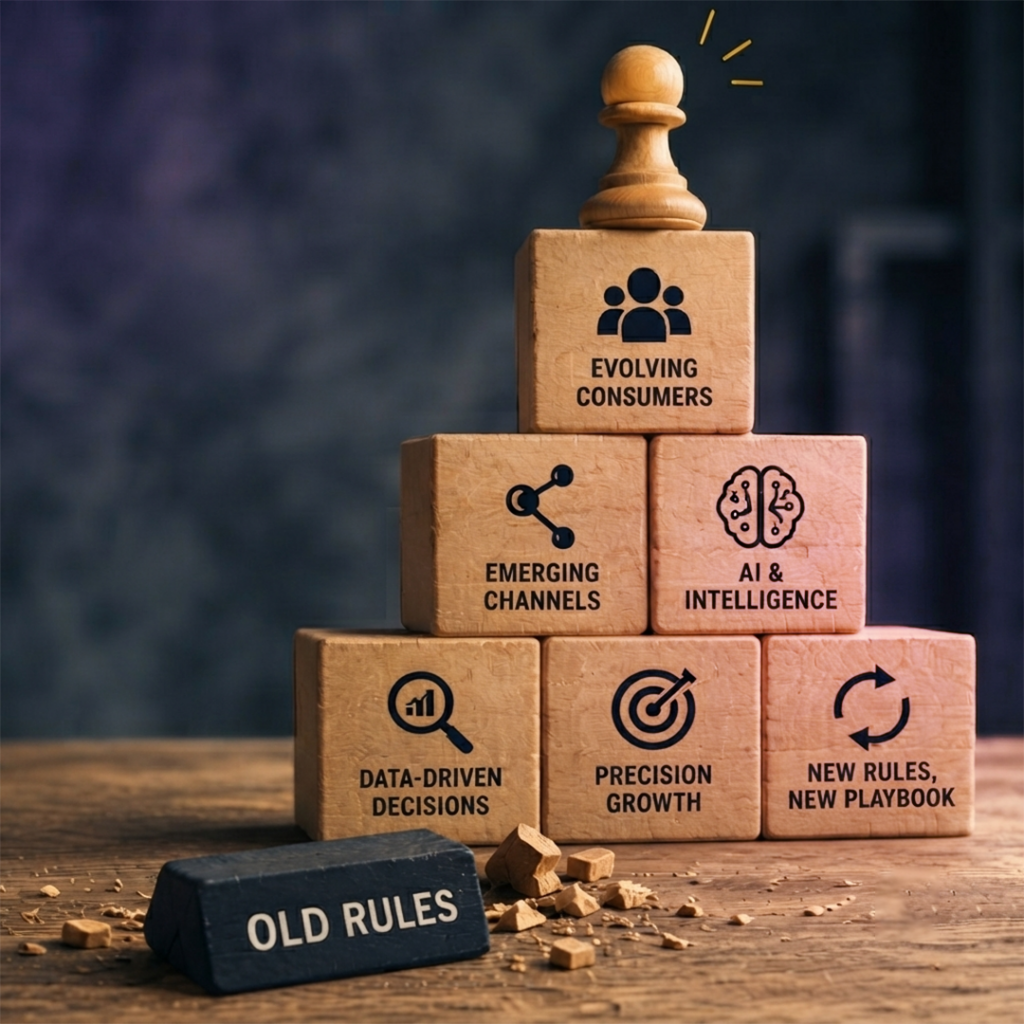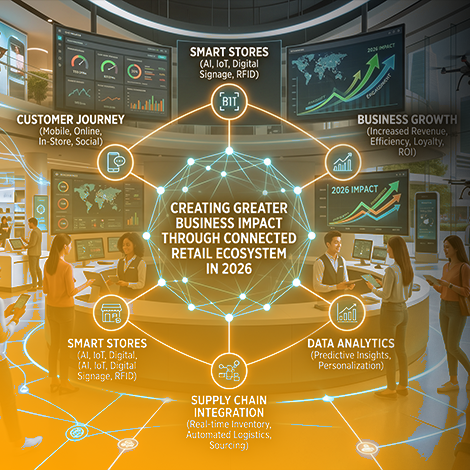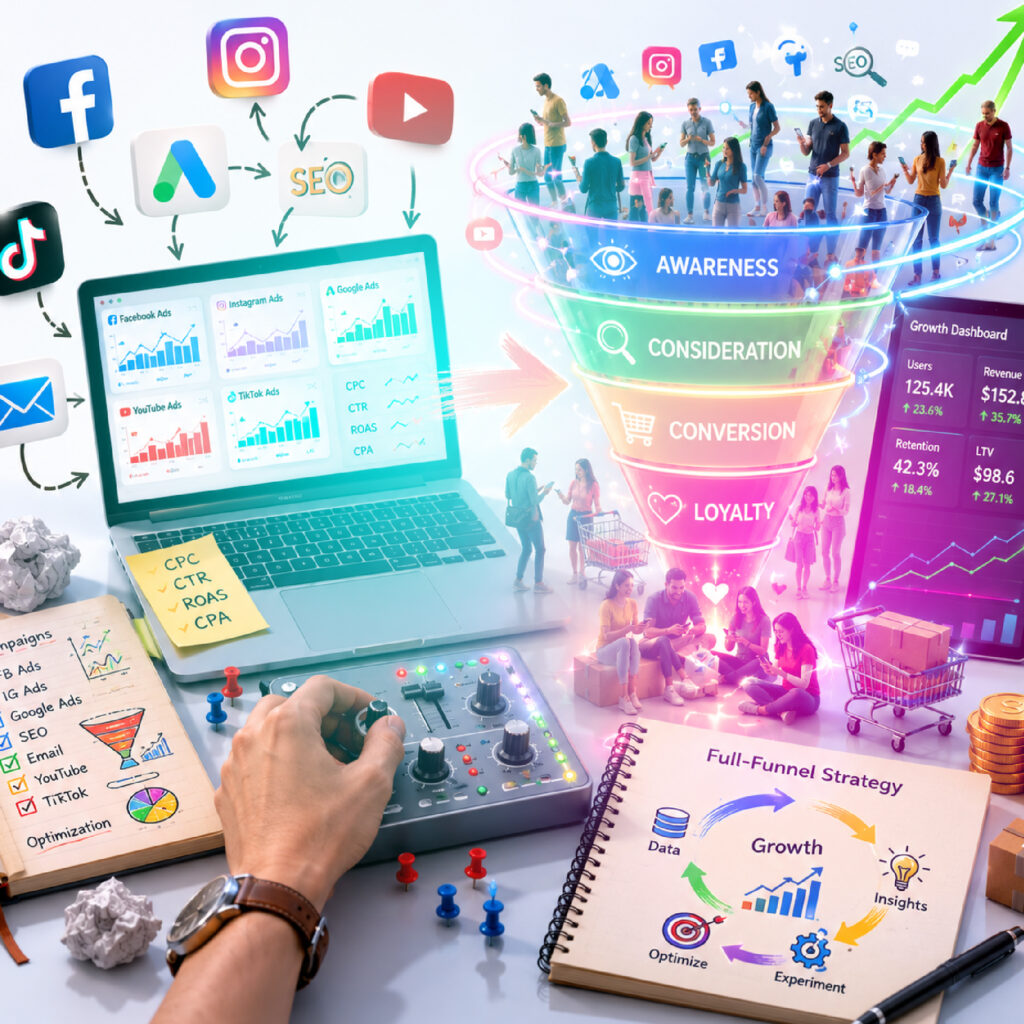
Marketing in 2026 is no longer organised around channels, campaigns, or even media plans. It is operating as a connected growth system, where media, commerce, data, and creativity are increasingly inseparable. For CMOs, the challenge is not choosing between brand and performance, but architecting infrastructure that delivers both at scale. This is the year marketing stops optimising parts and starts orchestrating the whole.
- Marketing’s New Reality: Growth Is Now a System, Not a Set of Channels
The logic that once shaped marketing organisations no longer reflects how consumers behave or how growth is delivered. Today’s journeys collapse streaming, scrolling, searching, and shopping into a single, continuous experience. In APAC, where super-apps, quick commerce, and retail-led ecosystems dominate, inspiration and transaction often sit just a few taps apart.
As a result, marketing has quietly shifted from channel management to system orchestration. Commerce media and Retail Media Networks (RMNs) offer a clear signal of this new reality: media, merchandising, and measurement already coexist inside the same environment. It is no coincidence that a strong majority of marketers plan to increase RMN investment, driven by materially stronger outcomes on purchase intent and conversion. The deeper change is the convergence of trade, shopper, brand, and digital budgets into unified growth engines that demand new operating models, new metrics, and new leadership muscle.
- Brand Building in the Age of Machine-Led Choice
AI assistants have become an invisible but powerful layer between brands and consumers. Studies show that 74% of those who use AI assistants actively seek out AI-driven recommendations, indicating how preference is increasingly shaped by algorithms. Brands now compete not just for cultural relevance, but for algorithmic preference.
In this context, the role of GenAI in insights and brand strategy has matured. Speed alone is no longer the win. Impact is measured through business growth, innovation quality, and time unlocked for strategic thinking. That shift places new demands on client-side teams: moving past pilot fatigue toward purposeful, scaled use of AI that strengthens, not replaces, human judgment. Strategic storytelling, critical thinking, and AI literacy become core brand-building capabilities, ensuring that machine-led selection still delivers human connection.
- Creative Intelligence: When Optimisation Becomes Continuous Learning
Creative has entered its most dynamic phase in decades. 75% of marketers express strong optimism about generative AI, 2026 is the point where experimentation gives way to embedded systems. Creative intelligence now operates as a continuous learning loop: generating, testing, and refining assets in near real time across formats, audiences, and moments.
Agentic optimisation, where AI analyses past performance, live signals, and audience response to dynamically adjust campaigns, is becoming standard practice. MMA’s Consortium for AI Personalization (CAP) illustrates the scale of this shift: real-world trials combining GenAI-powered creative diversity with AI decisioning have delivered average KPI uplifts exceeding 100% against business-as-usual benchmarks. Yet the differentiator remains human. Brand leaders define the narrative territory, ethical boundaries, and emotional intent while AI handles the complexity and variation no human system could manage alone.
- Retail Media Networks as the Backbone of Commerce-Led Growth
Retail media has moved decisively beyond its “emerging channel” phase. With more than 200 Retail Media Networks now live globally and rapid expansion across APAC, it is functioning as core commerce infrastructure, shaping purchase decisions both online and in-store. That shift is being driven by performance: RMNs are delivering significantly stronger outcomes than standard digital advertising, with a Kantar study showing up to 1.8x better results overall and nearly three times the impact on purchase intent. It’s little surprise, then, that 35% of marketers plan to increase RMN investment in 2026, as retail media cements its role at the centre of commerce-led growth.
The next phase of value creation lies in collaboration. As budgets scale, brands and retailers must align on transparency, incrementality, and unified measurement to sustain trust and momentum. The mainstreaming of shoppable formats across CTV and streaming environments will accelerate this convergence further, especially in video-first markets such as India and Southeast Asia. Retail media is no longer adjacent to brand building, it is embedded within it, directly linking storytelling to transaction.
The 2026 CMO Mandate: Leading Growth as Infrastructure
The defining shift of marketing in 2026 is not technological, it is structural. Growth is increasingly delivered by systems that connect media exposure, creative intelligence, and commerce outcomes through shared decision layers. The most advanced CMOs in APAC are already treating AI as infrastructure rather than experimentation, prioritising shared data and measurement foundations, and aligning teams around system-level outcomes such as incrementality and marginal ROI.
In this environment, scale is handled by machines. Distinctiveness remains human-led. The brands that win in 2026 will be those that understand how to design marketing as a connected system – one where AI accelerates execution, commerce closes the loop, and strategy defines the difference.