70% of Gen Z conduct transactions via smartphone, and trust is increasingly shaped by real experiences rather than brand reputation. Entering 2026, this generation has become a core user group for the Banking & Finance industry, characterized by digital-first, cautious behavior and high expectations for experience. In this context, designing a suitable Brand Experience has become a critical condition for attracting and sustaining long-term engagement. This article synthesizes key Gen Z insights and outlines 10 Brand Experience trends to help brands adapt effectively in 2026.
As Gen Z continues to play a central role in the digital financial ecosystem, understanding their behavior and experience expectations has become a decisive factor for Banking & Finance brands. This article first clarifies the most prominent Gen Z insights, then systematizes Brand Experience trends aligned with the 2026 context. Following this logic, the opening section focuses on decoding the shift in financial behavior and bank selection criteria among this generation.
- Decoding Gen Z Insights and Strategic Implications for Brand Experience in Banking & Finance
In recent years, Gen Z is no longer a future customer segment for the Banking & Finance industry, but an active user group with clearly defined financial behaviors. Below are the core insights shaping how Gen Z approaches financial services today.
- Insight 1: Trust is shifting away from traditional banks: Only 22% of Gen Z trust traditional banks while 54% trust fintech companies, showing that trust is increasingly built through transparency, responsiveness, and real user experience rather than brand legacy.
- Insight 2: Smartphone-first access is the default: With 70% of Gen Z conducting banking transactions via smartphones, mobile has become the primary space where they manage finances, interact with services, and evaluate financial brands.
- Insight 3: Financially aware but lacking a solid knowledge foundation: Although 85% of Gen Z start saving or investing before age 22, financial knowledge often comes from fragmented sources such as social media and short-form content rather than structured education.
- Insight 4: A generation labeled impulsive is actually cautious: Despite common stereotypes, Gen Z saves around 32% of their income and 57% prefer safer investment options, reflecting a more careful and considered approach to financial decisions.
- Insight 5: Finance must carry a social stance: Gen Z increasingly expects financial brands to demonstrate environmental and social responsibility, linking financial decisions not only to personal benefits but also to broader societal impact.
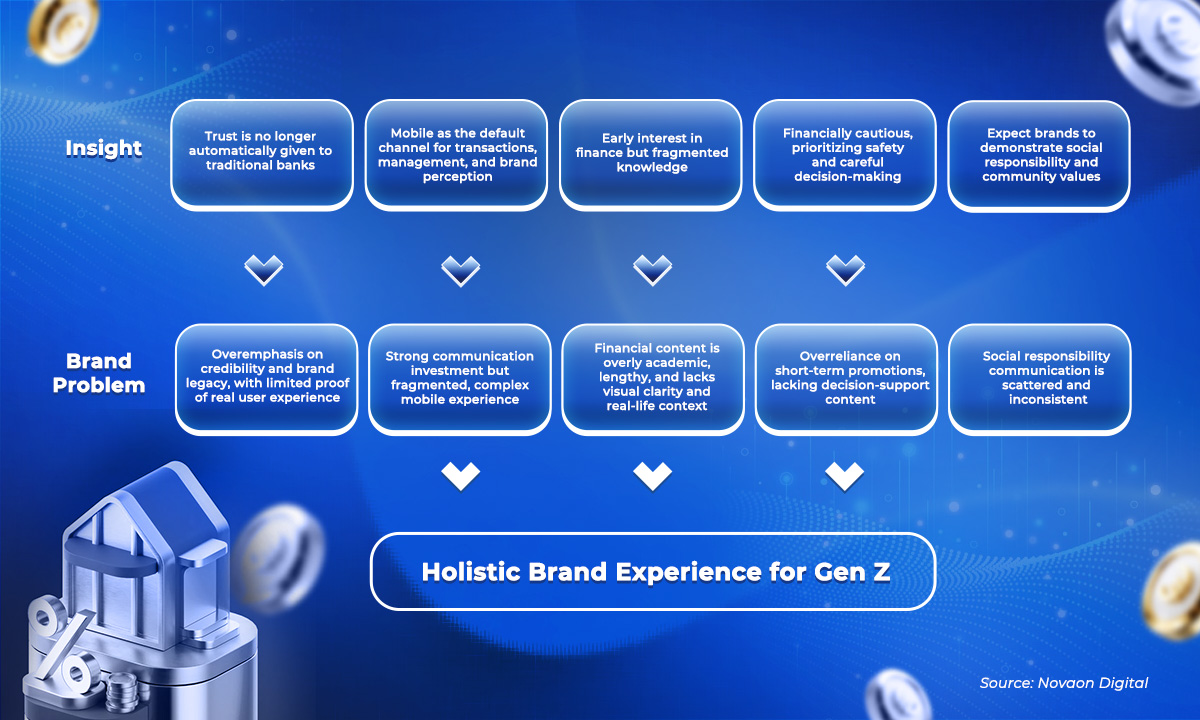 5 Gen Z insights indicate that Brand Experience needs to be comprehensively redesigned in the Banking & Finance industry. (Source: Novaon Digital)
These insights show that Gen Z is reshaping how banks are selected and evaluated, from trust and digital experience to personal values. In response, Brand Experience must evolve from a communication layer into an integrated strategy combining content, technology, data, and brand values. The following 10 Brand Experience trends highlight how Banking & Finance brands can adapt and engage Gen Z more effectively in 2026.
- 10 Brand Experience Trends for Winning Gen Z in Banking & Finance 2026
Trend 1: Be Where They Are: TikTok, Instagram, and Beyond
Rather than distributing content only through traditional channels, brands need to restructure their touchpoint ecosystem to align with current digital content consumption contexts. Being present on the right platforms and in the right formats enhances organic reach and sustains continuous engagement with young users.
Banking & Finance brands should build an Always-on Content system on TikTok, Instagram, and YouTube using short videos, stories, challenges, or real-life financial scenarios to balance informational and entertainment value. At the same time, Social Listening should be applied to track trending financial topics, enabling content optimization based on actual Gen Z consumption behavior instead of maintaining long-form, low-engagement formats.
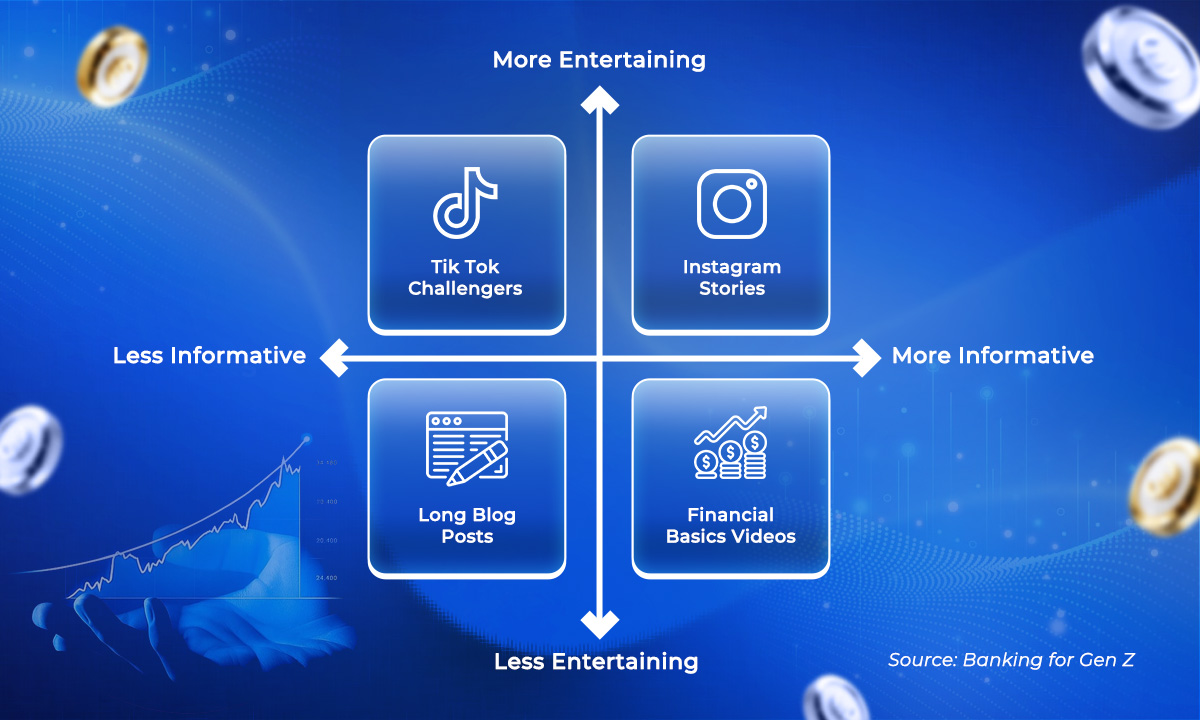
Gen Z’s preferred content formats need to balance entertainment and information.
(Source: Banking for GenZ)
Trend 2: Show, Don’t Tell: Authenticity is Everything
In an oversaturated media environment, brand messages are only persuasive when supported by concrete experiential evidence. Authenticity therefore becomes a foundational factor in transforming communication from brand claims into experiences that can be felt and verified.
Brands can enhance transparency through real case studies, authentic user experiences, UGC, and influencer marketing aligned with Gen Z; while clearly demonstrating brand values and community-related activities throughout actual development processes. The combination of real experiences, tangible data, and user voices shifts messaging from brand statements to experiential proof, thereby increasing credibility and authenticity in the eyes of Gen Z.
Trend 3: Education, But Make It Fun
Financial education needs to be redesigned in an experience-friendly manner rather than maintaining traditional knowledge-delivery structures. When content is simplified in presentation while maintaining accuracy, brands can bridge the gap between financial knowledge and practical comprehension.
In practice, banks can integrate gamification within apps, develop personal finance quizzes, spending management simulators, or scenario-based content series on saving and micro-investing. At the same time, content should be designed to be both easy to understand and accurate, avoiding the oversimplification of important financial concepts.
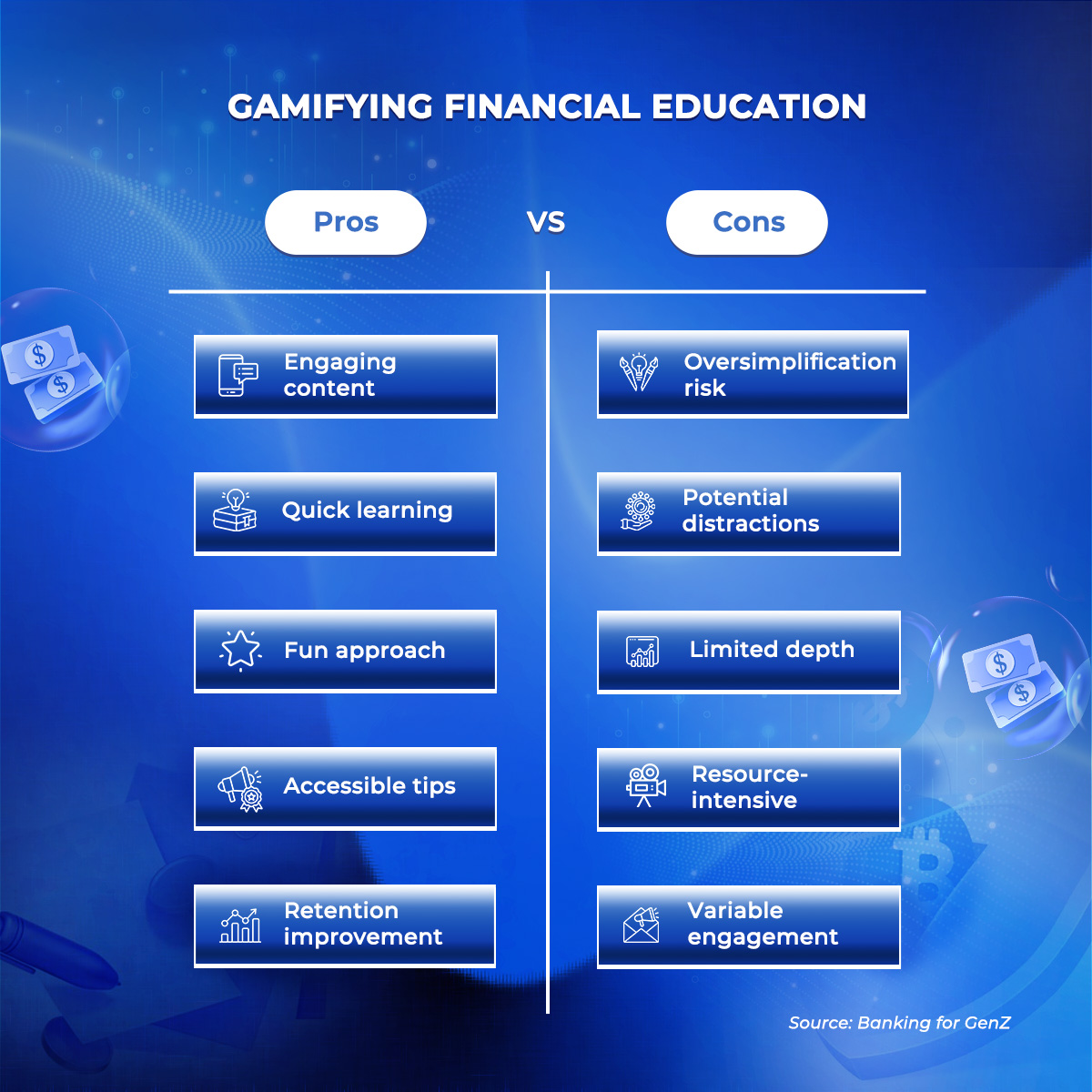 Gamification enhances memorability but must be balanced with knowledge accuracy.
(Source: Banking for GenZ)
Trend 4: Meet Them on Mobile, Or Don’t Bother
Mobile should be treated as the core experience platform rather than merely a supporting transaction channel. The quality of the app experience directly reflects the brand’s convenience, modernity, and competitiveness in financial services.
Therefore, banks should prioritize UX/UI optimization, improve transaction processing speed, shorten user journeys, and minimize complex steps. Essential Gen Z-oriented features such as budgeting tools, fast transfers, P2P payments, and behavior-based personalized notifications should be integrated to transform mobile from a simple transaction tool into the center of the financial experience.
Trend 5: Personalization is Your Golden Ticket
Personalization is no longer an added advantage but a standard in customer experience design. Leveraging behavioral data enables brands to shift from mass communication to context-based, individualized interaction.
Strategically, brands can utilize Customer Data Platforms to unify data from multiple touchpoints such as apps, websites, and social channels; thereby analyzing service usage behavior, personalizing interactions, and automating messages, offers, and product recommendations tailored to each user segment and stage of the financial journey.
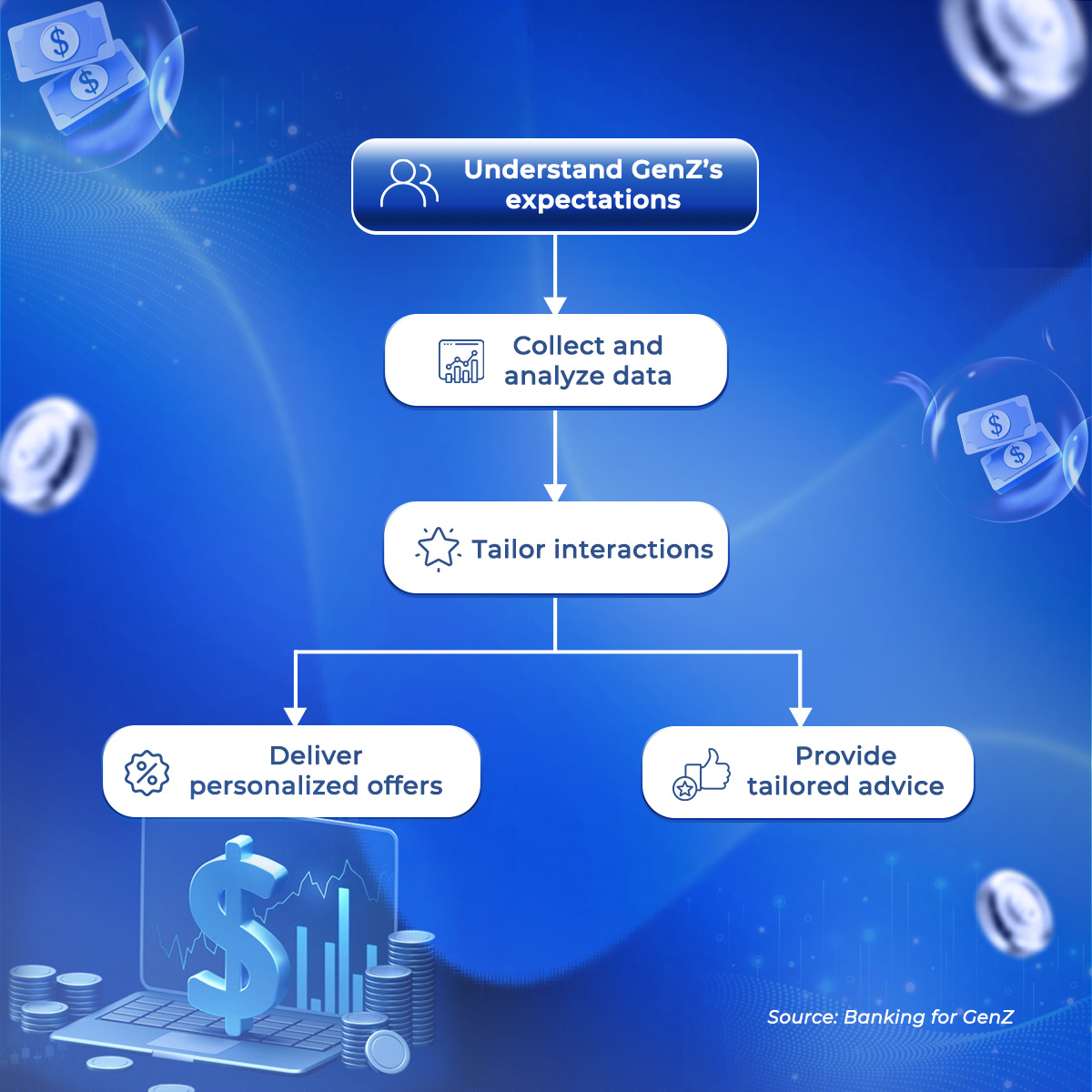
The personalization process from data to tailored interaction and offers.
(Source: Banking for GenZ)
Trend 6: Champion Social Causes
Brand value is increasingly evaluated based on real societal impact rather than solely on functional product benefits. When social commitments are expressed consistently, the brand experience becomes more meaningful and capable of fostering long-term emotional resonance.
Banks can implement consistent CSR strategies by embedding sustainability into products, services, and communication, while proactively highlighting community support initiatives, local investments, transparent reporting, and socially oriented programs. This helps Gen Z clearly perceive the brand’s role and real value within the broader social ecosystem.
Trend 7: Influencers Who Get It
Influencers are no longer just amplifiers of communication, but a critical component in building brand trust. When creators align with Gen Z in lifestyle and content expression, financial messages are received as more relatable, natural, and trustworthy.
In execution, brands should build long-term influencer strategies rather than short-term campaign collaborations, prioritizing creators in personal finance, lifestyle, or financial education who resonate with Gen Z. Selection should be based on audience fit, content style, credibility, and influence, instead of focusing solely on reach or superficial metrics, thereby making financial messaging more relatable and trustworthy.
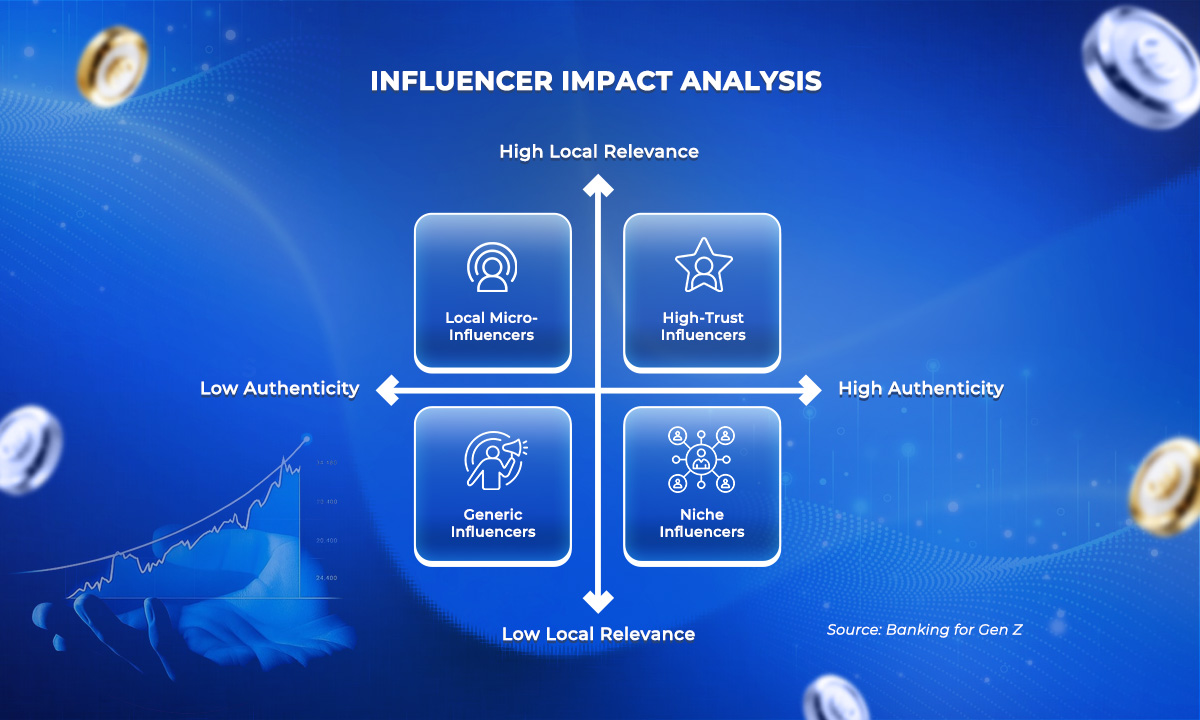
Influencer evaluation matrix based on authenticity and audience relevance.
(Source: Banking for GenZ)
Trend 8: Go Viral with Fun Challenges!
Participatory con vfcChallenge-based activities not only drive organic reach on digital platforms but also enhance engagement and long-term brand recall.
Banks can design interactive campaigns directly linked to real-life financial behaviors, such as savings challenges, weekly spending management challenges, or personal financial goal tracking, combined with clear participation mechanisms, transparent rewards, and progress tracking on digital platforms. This approach increases engagement while transforming users from passive receivers into active participants in the brand experience.
Trend 9: Campus Connection: Team Up with Local Universities
Universities are strategic touchpoints in shaping young users’ financial habits. Early presence at this stage helps brands build awareness, familiarity, and long-term engagement foundations from first financial experiences.
Financial brands can proactively collaborate with universities through personal finance workshops, student account programs, financial mentoring, and partnerships with student clubs and campus events. Early engagement in academic environments enables brands to build trust, shape service usage habits, and sustain long-term relationships with users from the beginning of their financial journey.
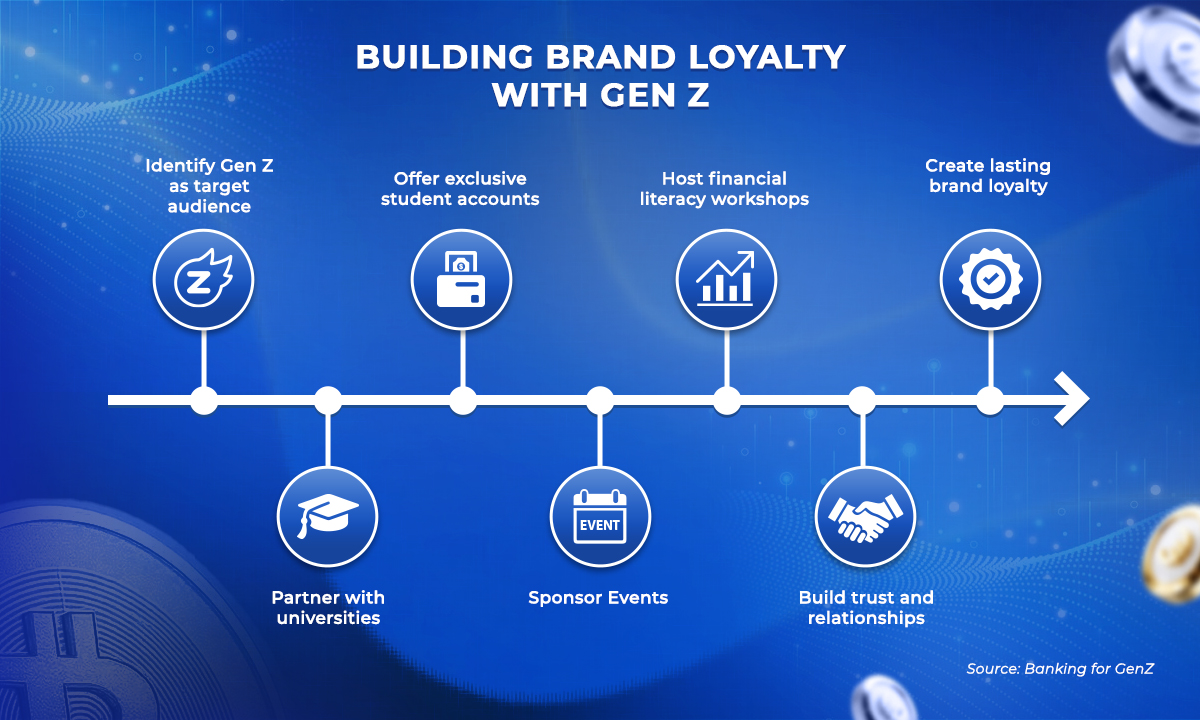
The journey of building Gen Z loyalty starts from the student stage.
(Source: Banking for GenZ)
Trend 10: Meme-ify Your Message
Communication language must be adapted to digital culture to enhance relevance among younger audiences. When financial messages are delivered in relatable, shareable, and culturally aligned formats, content becomes easier to understand and more likely to spread organically on digital platforms.
In practice, brands can develop real-time content systems based on memes and relevant digital trends, while translating familiar financial situations into short, simple, and shareable content. When memes are directly linked to product features and real-life financial contexts, the message becomes not only entertaining but also more memorable and naturally accessible to Gen Z.
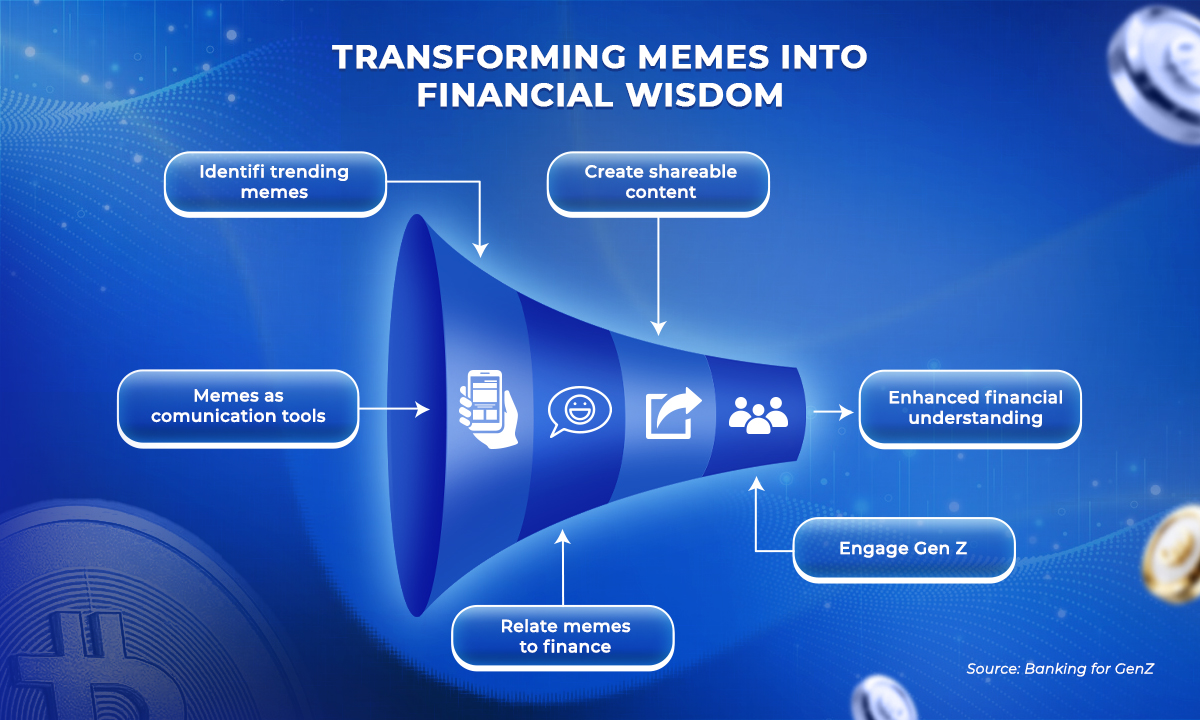 Linking memes with financial content enhances Gen Z comprehension and engagement.
(Source: Banking for GenZ)
These 10 directions show that Brand Experience is becoming the central focus in how Banking & Finance brands approach Gen Z, rather than relying solely on communication or short-term promotions. This creates the need to reassess brand experience strategy from a more long-term and sustainable perspective in the 2026 context.
- Expert Perspective: What Is the Sustainable Direction for Banking & Finance in 2026?
From the insights and the 10 Brand Experience trends above, it is evident that Gen Z is redefining bank selection criteria toward real experience, personalization, and consistent brand values. This requires the Banking & Finance industry to shift from isolated communication efforts to building an end-to-end brand experience across the entire customer journey.
To operationalize this direction, at Novaon Digital, Brand Experience is implemented based on the SCT (Strategy – Creative – Technology) model, integrating strategic thinking, content creativity, and technological platforms into a unified brand experience system. This enables Banking & Finance brands not only to effectively engage Gen Z but also to build sustainable competitive advantages in the digital finance era.