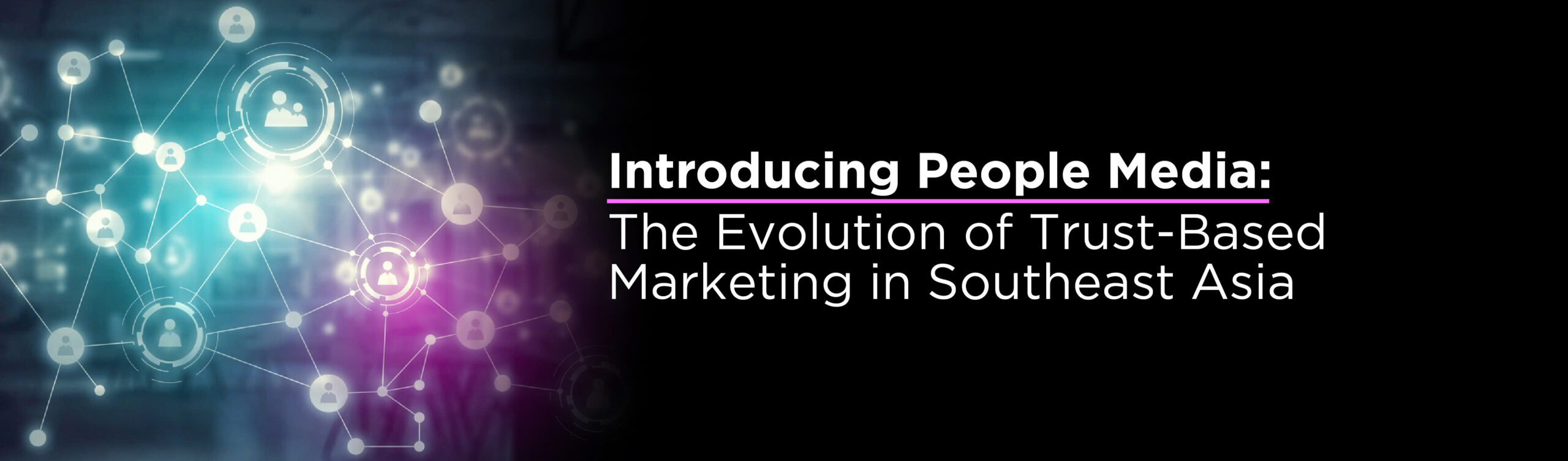
Over the past decade, Southeast Asia (SEA) has witnessed an unprecedented expansion of human-led influence. What began as fragmented experiments with KOLs, KOCs, and community voices has matured into the primary driver of purchase decisions across the region.
However, despite this dominance, the industry remains at a crossroads. The industry still lacks: a system-level definition of how trust operates, a clear architectural position for People Media within marketing, and a mechanism to sustain trust beyond individual campaigns.
Based on our data-driven analysis and experience managing hundreds of regional campaigns, YouNet — The Measure Group — proposes a fundamental reframing: Trust is not a soft by-product of media execution. In Southeast Asia, trust requires its own dedicated, verifiable system. We call this People Media.
In this article, we will dive into proposing the components of People Media, and what makes it so essential to the way marketing is done in the region.
- From Channel-Based to Trust-Based Marketing
Traditional marketing frameworks treat trust as an eventual outcome of a campaign. In the high-velocity markets of Southeast Asia, trust is much more than that, it has become an actual operating layer that dictates what channels and activities to prioritize and how budget should be allocated.
Today, marketing functions through four interdependent media systems that form a comprehensive “Marketing Systems OS”:
- Digital Media (Awareness System): Optimized by algorithms and bidding to generate reach and traffic.
- People Media (Trust & Consideration System): Operated through social interaction to create and validate trust.
- Retail Media (Commerce System): Operating near the point of purchase to convert intent into revenue.
- CRM & Loyalty Media (Relationship System): Operating post-purchase to preserve memory and lifetime value.
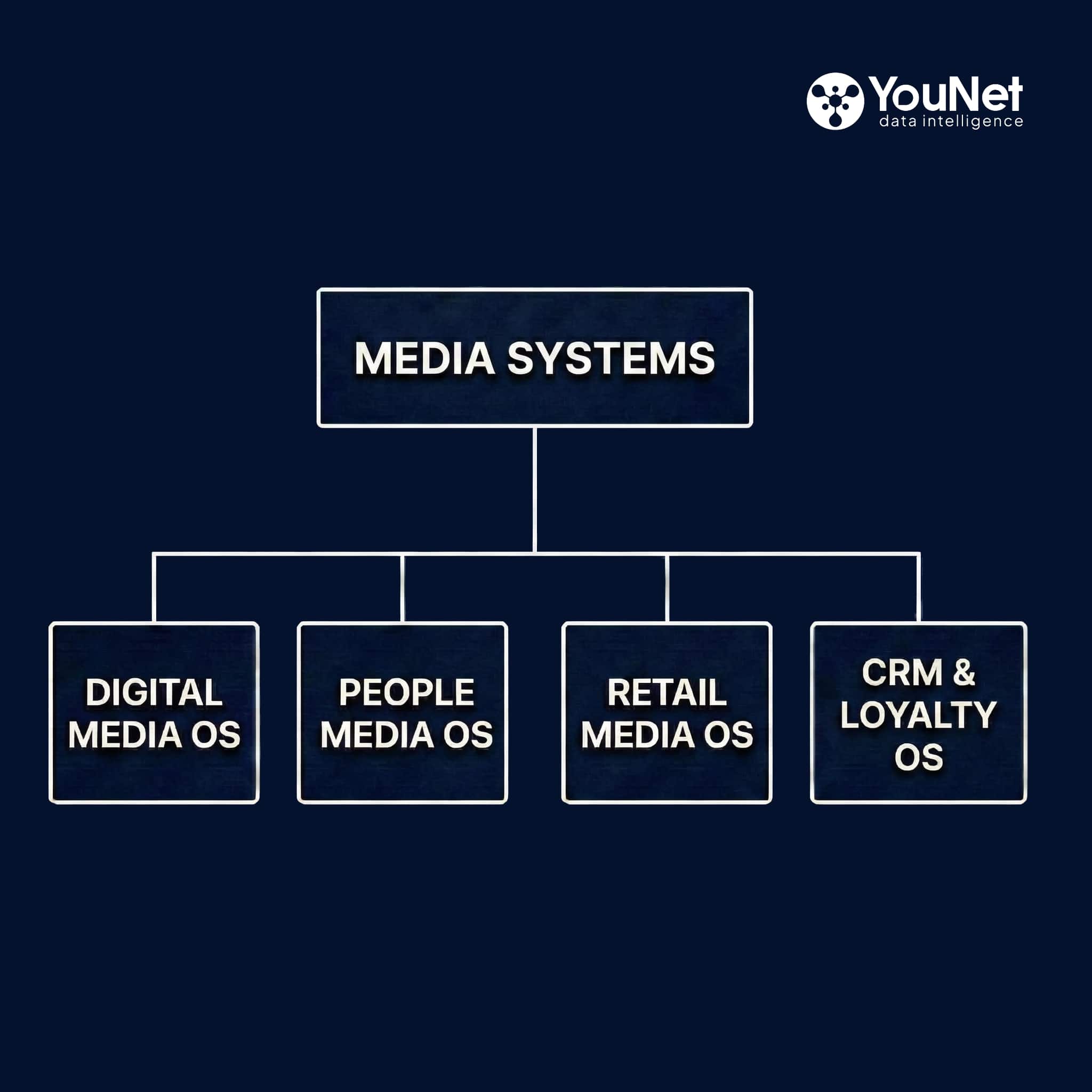
Marketing functions through four interdependent media systems that form a comprehensive “Marketing Systems OS”
Because trust behaves fundamentally differently from “attention” or “intent,” People Media cannot be reduced to a mere channel. It is a distinct system defined by a unique unit of value (Trust), a behavioral function (Confirmation), and an accumulation mechanism (Social Repetition).
- Six Mechanisms of The Trust Engine
In Southeast Asia, trust is driven by six distinct mechanisms triggered in specific social contexts. These six distinct mechanisms form the structural backbone of any People Media strategy.
People Media Groups thus should not be treated as components or tactics. They are sources that activate each of the specific trust mechanisms:
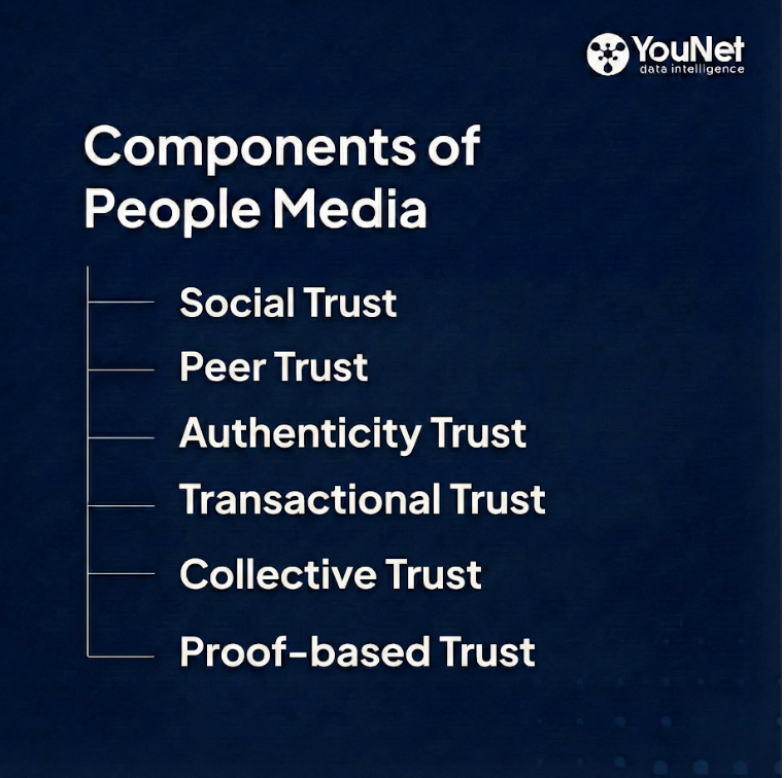
Six Mechanisms of The Trust Engine which are also the Six Components of People Media
| Trust Mechanism | Definition | Primary Activators |
| Social Trust | Formed through public visibility and perceived authority. | KOLs / Influencers |
| Peer Trust | Formed through people with similar contexts and experiences. | KOCs / Consumers |
| Authenticity Trust | Formed through unpolished, real-life, non-commercial tones. | UGC / Everyday Creators |
| Transactional Trust | Formed through real-time interaction at the moment of decision. | Livestreamers |
| Collective Trust | Formed through repetition and consensus within a group. | Communities / Advocacy Voices |
| Proof-based Trust | Formed through evidence, expert explanation, and verification. | Experts / Professionals / Employees |
No single group activates all trust mechanisms. Therefore, effectiveness in People Media is not about “using the right person,” but about matching the trust mechanism to the objective.
- Marketing Applications within the People Media Framework
People Media is the infrastructure upon which several high-value marketing applications operate. Success depends on selecting the right application for the stage of the consumer journey:
- Influencer Booking for exposure
- Influencer Marketing for attention
- Social Outreach for contextual presence
- Social Advocacy for trust formation
- Perception Advocacy Marketing (PAM) for perception shift
- Retention and loyalty reinforcement
- Crisis and reputation management
- Market intelligence through trust signals
Marketing failure occurs when the wrong mechanism is activated – for example, attempting to shift perception through reach alone without collective validation.
- Closing the Loop: Preserving Trust as Memory
A critical, often ignored reality of modern marketing is that trust is consumable. Once a purchase is made, that trust must be converted into a permanent asset, or the brand is forced to rebuild its infrastructure from zero with every new campaign.
This is where the synergy between People Media and CRM & Loyalty Media becomes vital. While People Media creates the initial spark of trust, CRM & Loyalty Media preserves that experience as Brand Memory. This ensures that advocacy compounds over time rather than dissipating.
Together, these systems form a closed loop:
Trust → Experience → Memory → Advocacy → Trust
Conclusion: The Strategic Imperative
In Southeast Asia, trust is not a soft outcome; it is a structural media function.
- Digital Media creates reach.
- People Media creates trust.
- Retail Media creates revenue.
- CRM & Loyalty Media ensures trust survives.
People Media represents the structural response to how Southeast Asian society forms belief. Marketing systems that ignore this reality will remain loud in terms of reach, but strategically weak in terms of sustainable growth.
For more in-depth insights into the People Media infrastructure, visit: https://www.younetgroup.com/vi/people-media/